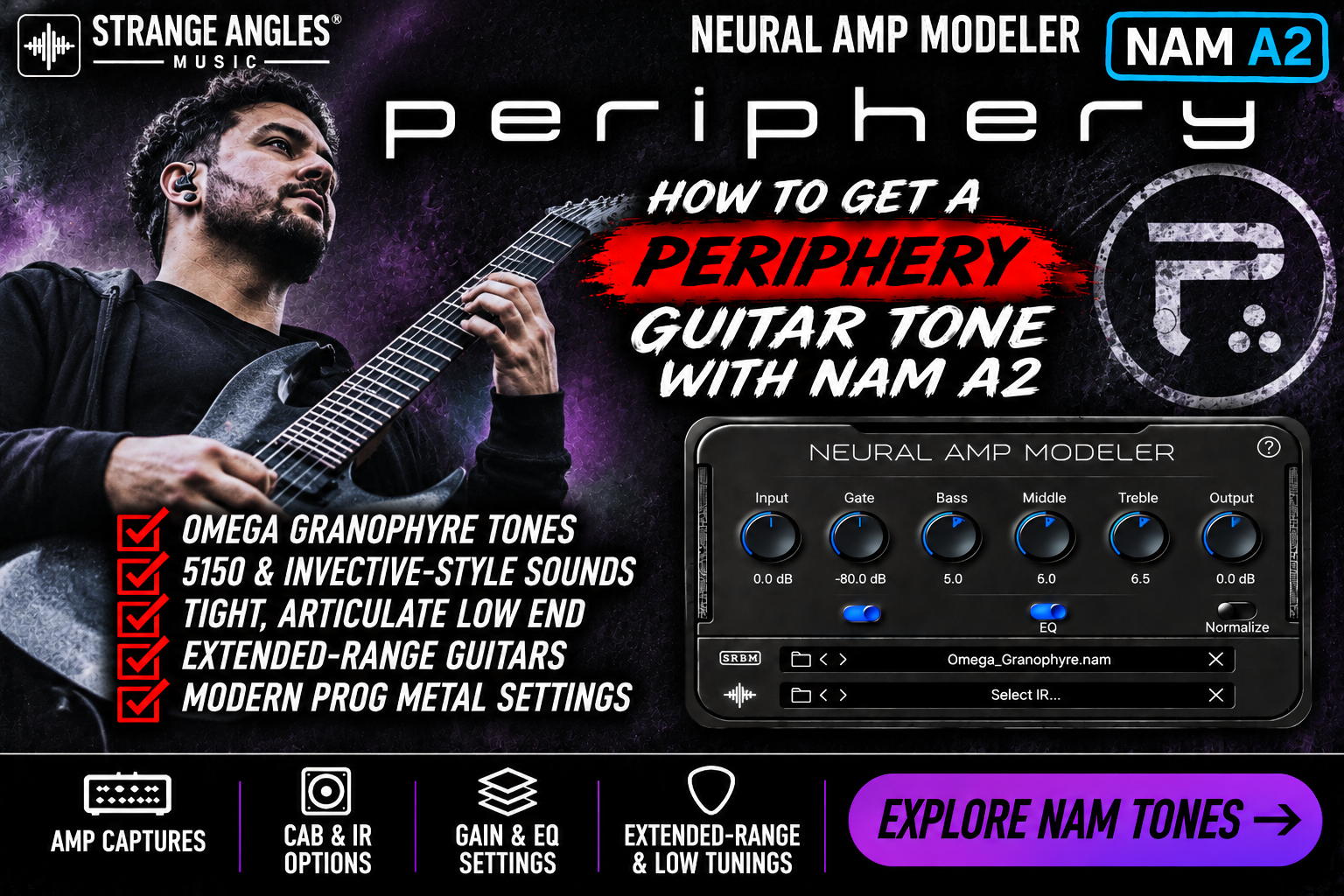
How to Get a Periphery Guitar Tone with NAM A2
Periphery helped define the modern progressive metal guitar sound: tight low-end response, aggressive midrange, articulate picking, complex rhythmic patterns, and extended-range guitars that stay clear even in dense arrangements.
The band's sound has evolved across albums, and the guitarists have used different amps and digital rigs along the way. But there are some recurring ingredients that make a great starting point if you're trying to get into that Periphery-inspired territory.
In this guide, we'll look at the gear and tonal characteristics associated with Misha Mansoor, Mark Holcomb, and Jake Bowen, then explore how to approach that sound using Neural Amp Modeler A2 profiles.
Looking for Great Tones?
🎸 Explore professionally captured NAM A2 profiles designed for modern metal, progressive metal, and tight high-gain guitar tones.
What Makes the Periphery Guitar Tone Different?
Periphery's guitar sound is more than simply adding gain to a high-gain amp. The important part is how the entire signal chain works together.
A few characteristics stand out:
Tight low end: Low-tuned riffs stay controlled instead of becoming loose or boomy.
Aggressive upper mids: The guitars remain present and cut through dense mixes.
Clear note separation: Complex chords and fast rhythmic patterns remain articulate.
Controlled gain: Distortion is aggressive, but excessive gain can make the sound less defined.
Careful cabinet and IR choices: The speaker response plays a major role in shaping the final recorded tone.
The goal is a guitar sound that feels massive without losing definition.
What Amps Has Periphery Used?
Periphery's guitar rigs have included both real amplifiers and digital modeling systems. The Fractal Audio Axe-Fx has been a major part of the band's live and recording setups.
The band's Periphery V: Djent Is Not a Genre recording process also involved several real amplifiers, including the Peavey Invective, Omega Granophyre, Carstens Grace, and a modified EVH 5150.
These are useful reference points when choosing NAM profiles for a similar tonal direction.
Omega Granophyre
The Omega Granophyre is especially relevant to this sound. It has been part of Periphery's recorded guitar setup and is known for aggressive modern high-gain tones.
For a Periphery-inspired NAM setup, this is one of the first amp types I'd explore. It can provide the tight, aggressive foundation needed for progressive metal rhythm tracks.
Peavey 5150 and EVH 5150
The 5150 family is another useful reference for modern metal.
These amps offer aggressive mids, strong attack, and the familiar high-gain character that works well for tight rhythm playing. A good 5150-style capture is a strong alternative when you're looking for a punchy, direct sound.
Peavey Invective
The Peavey Invective is closely associated with Misha Mansoor and was part of Periphery's touring and recording equipment.
Its modern high-gain character makes it another useful direction to explore when building a tight progressive metal tone.
Carstens Grace
The Carstens Grace was also used during the Periphery V recording process. It demonstrates that the band's guitar sound isn't built around one amplifier alone.
Different amps can contribute different textures, and layering or choosing between them can help create a more interesting final guitar sound.
Best NAM A2 Profiles to Explore for a Periphery-Inspired Tone
You don't need to duplicate the band's exact equipment to get into the same tonal territory. The following Strange Angles Music NAM options provide several useful starting points.
1. NAM Everything Pack
The NAM Everything Pack is a strong place to start if you want a variety of modern high-gain amp options.
It includes profiles of amps such as the Omega Granophyre, Fortin Evil Pumpkin, Fortin Meshuggah 2.0, Omega Obsidian, Driftwood Purple Nightmare, and others.
The Omega Granophyre is particularly relevant to the Periphery sound, while the other amps give you different ways to approach tight, aggressive progressive metal tones.
Explore the NAM Everything Pack →
2. The Chuggernaut NAM Pack
The Chuggernaut NAM Pack includes captures from the EVH 5150 III Mod, KSR Orthos, and ENGL Savage.
The 5150 III Mod is a particularly useful starting point for aggressive rhythm tones with strong attack and a focused low end.
The pack also includes custom IRs, giving you additional cabinet options to shape your sound.
Explore The Chuggernaut NAM Pack →
3. Euge Valovirta Hard Hitters Vol. 2 NAM
For another collection of high-gain options, Hard Hitters Vol. 2 includes Peavey 5150 Block Letter and 5150 II captures, along with other classic high-gain amplifiers.
These profiles offer a different flavor from the more modern amps and are worth experimenting with for aggressive rhythm and lead tones.
Explore Hard Hitters Vol. 2 NAM →
How to Dial In a Periphery-Inspired NAM Tone
Start with a good high-gain profile and keep the signal chain simple. Don't immediately add multiple EQs, boosts, and effects.
1. Start with the Right Amp Capture
Try an Omega Granophyre-style capture first. If you want a more traditional 5150 character, compare it with a 5150-style profile.
Choose the capture that gives you the best note definition with your guitar and tuning.
2. Keep the Low End Under Control
Low-tuned guitars can quickly become muddy.
Avoid adding excessive bass before the amp. If the sound is too loose, experiment with reducing the low frequencies feeding the amp and adjusting the cabinet or IR.
3. Use Less Gain Than You Think
A common mistake is adding too much distortion.
Start with moderate-to-high gain and increase it only until the sound has the sustain and aggression you want. Too much gain can blur fast passages and complex chords.
4. Choose an IR That Complements the Amp
The cabinet and IR are a major part of the final tone.
Try different speaker responses rather than assuming the first IR will work. A balanced midrange and controlled low end can help the guitar sit better in a mix.
5. Make Small EQ Adjustments
If the tone needs more presence, experiment with the upper mids. If it sounds harsh, look at the high frequencies before making large changes elsewhere.
Always make adjustments while playing along with a backing track. A tone that sounds huge by itself may not work as well in a full mix.
Guitar and Tuning Considerations
Periphery's guitar sound is closely associated with extended-range instruments and lower tunings.
Misha Mansoor has used Jackson Juggernaut guitars with Bare Knuckle pickups, while Mark Holcomb is strongly associated with his PRS signature guitars. The band has also experimented with different guitars and tunings throughout its recordings.
Your guitar and pickups will influence how a NAM capture responds. A bright pickup may produce a different result from a darker, higher-output pickup, even when using the same profile.
If you're using a seven- or eight-string guitar, pay particular attention to the low-frequency response. The goal is to keep the lowest notes controlled while preserving the attack and definition of the higher strings.
Can NAM A2 Recreate the Periphery Sound?
NAM A2 gives you a way to use captured amplifier tones, but an amp capture is only one part of a finished guitar sound.
The final result also depends on:
Your guitar and pickups
Playing technique and picking attack
Tuning and string gauge
Cabinet and IR selection
EQ and effects
Double-tracking and mixing
Periphery's records also use detailed production, layering, and arrangement. A single NAM profile won't automatically reproduce an entire album's guitar sound.
Think of these profiles as starting points for building your own tight, aggressive progressive metal tone.
Frequently Asked Questions
What amp is best for a Periphery-style guitar tone?
The Omega Granophyre is a particularly relevant starting point because it was used during the recording of Periphery V. Peavey 5150-style amps and the Peavey Invective are also useful reference points.
Does Periphery use Fractal Audio?
Yes. Fractal Audio Axe-Fx units have been an important part of the band's live and recording rigs. The band has also used real amplifiers in the studio.
Can I get a Periphery-style tone with NAM A2?
Yes. NAM A2 profiles can provide the amplifier foundation for a similar style of tone. You'll still need to dial in the cabinet response, EQ, tuning, and overall signal chain.
Should I use a boost with a NAM profile?
A boost can help tighten the low end and emphasize the attack, but it isn't always necessary. Try the profile on its own first, then add a boost if the sound needs more control.
What is the most important part of a Periphery-inspired guitar tone?
Clarity. The guitar needs enough aggression to sound heavy, but the low end and gain must remain controlled so complex riffs and chords stay articulate.
Final Thoughts
Periphery's guitar sound is a great example of how modern high-gain tones can be aggressive without sacrificing clarity.
Start with an Omega Granophyre or 5150-style NAM capture, find an IR that complements your guitar, and keep the gain and low end under control.
Experiment with different amps and profiles until you find the response that works best for your playing. The goal isn't to copy somebody else's settings exactly. It's to build a tight, powerful tone that works in your own mixes.