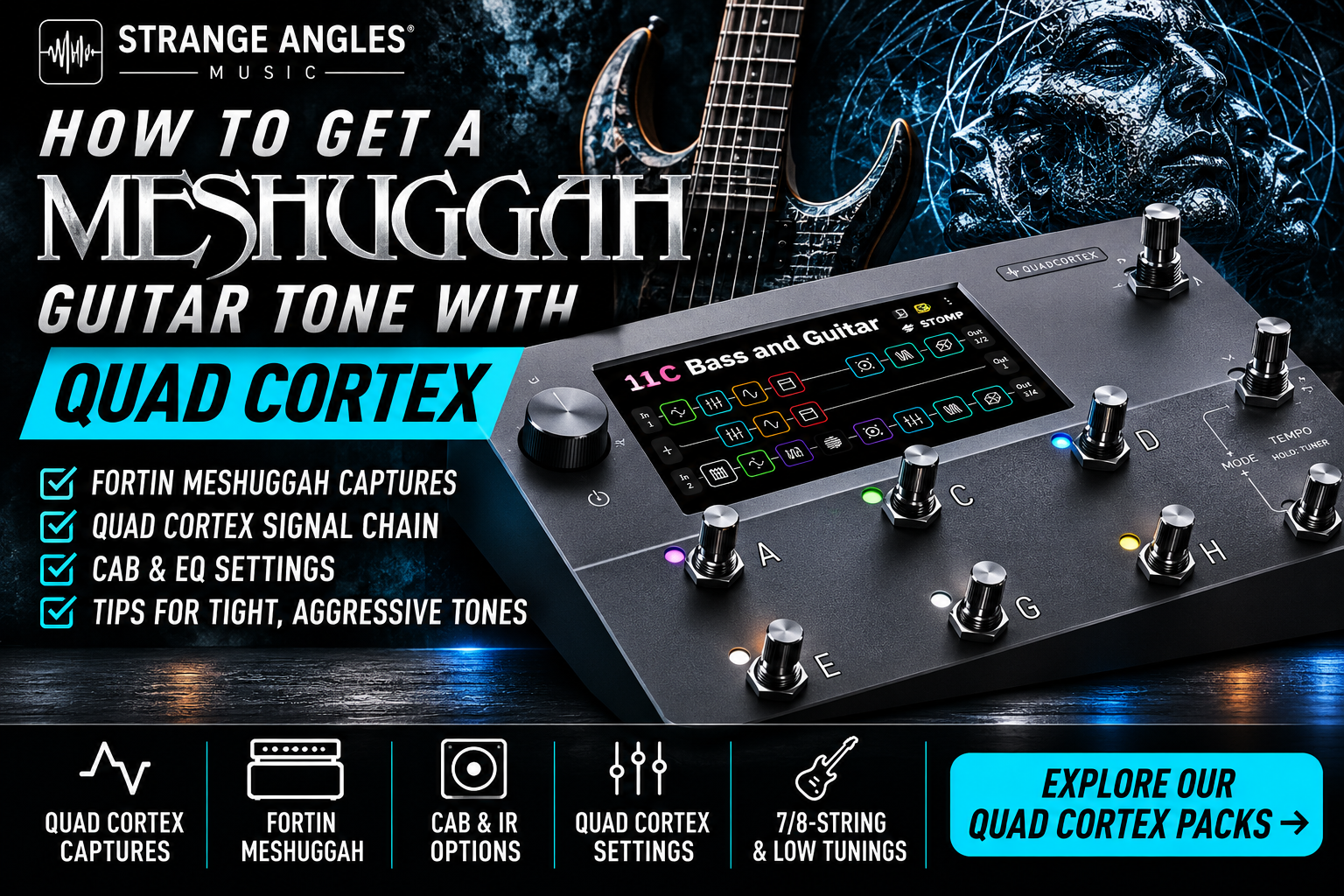
How to Get a Meshuggah Guitar Tone with Quad Cortex
Want to get that crushing, tight, aggressive Meshuggah guitar tone using the Neural DSP Quad Cortex?
Meshuggah's guitar sound is one of the most recognizable in modern metal. From extremely low tunings and percussive palm-muted riffs to aggressive high-gain amplification, their tone is built around precision, clarity, and controlled aggression.
A major part of the sound is the ability to keep extremely low guitar notes tight and articulate without losing the weight and impact of the riff.
One amplifier closely associated with the band is the Fortin Meshuggah Signature 50W, designed by Mike Fortin in collaboration with Fredrik Thordendal and Mårten Hagström.
The good news is that you don't need the original amplifier to explore this sound. With the Quad Cortex and the right Neural Captures, you can get started with a Meshuggah-inspired tone using captures of the signature amplifier.
In this guide, we'll cover the amplifier, Quad Cortex captures, signal-chain setup, cabinet choices, and practical tips for building your own modern djent and progressive metal tone.
Looking for Great Quad Cortex Tones?
Explore professionally captured high-gain amplifiers designed for modern metal, djent, progressive metal, and aggressive rhythm guitar.
From Fortin and Omega to Randall, Driftwood, and more, Strange Angles Music offers Quad Cortex captures built for serious guitar tones.
🎸 Browse Quad Cortex Captures →
What Makes the Meshuggah Guitar Tone So Distinctive?
Meshuggah's sound isn't simply about using a high-gain amplifier and turning up the distortion.
Several characteristics work together to create their signature guitar tone:
Extremely low tunings and extended-range guitars
Tight, aggressive high-gain amplification
Strong midrange definition
Fast, precise pick attack
Controlled low frequencies
Clear separation between individual notes
Powerful palm-muted rhythms
The goal is to produce a guitar tone that sounds massive without becoming muddy.
This is particularly important when playing low-tuned riffs. If the low end is too loose or the gain is excessive, individual notes can become difficult to distinguish.
A good Meshuggah-inspired tone needs aggression, but it also needs precision.
The Fortin Meshuggah Amplifier
The Fortin Meshuggah Signature 50W is one of the most interesting amplifier designs for players chasing this style of tone.
Developed by Mike Fortin in collaboration with Meshuggah guitarists Fredrik Thordendal and Mårten Hagström, the amplifier was designed to deliver the aggressive, tight response needed for extreme metal.
Its characteristics include:
Aggressive high-gain distortion
Tight low-frequency response
Strong note definition
Excellent articulation
Plenty of gain for modern extreme metal
The amplifier features two gain controls, allowing players to shape its gain character and response.
For Quad Cortex users, Neural Captures of this amplifier provide a convenient way to explore its tonal characteristics without owning the original hardware.
How to Get a Meshuggah Tone Using Quad Cortex
The easiest place to start is with a Neural Capture of the Fortin Meshuggah amplifier.
Once you have the capture loaded into your Quad Cortex, you can build the rest of your signal chain around it.
1. Start With a Fortin Meshuggah Capture
Begin with a D.I. capture of the Fortin Meshuggah amplifier.
This gives you the amplifier's core character while allowing you to experiment with different cabinet IRs or Quad Cortex cabinet blocks.
Start with a capture that has enough gain for your playing style, but avoid immediately adding more distortion.
Listen for tight palm mutes, strong note attack, and clarity when playing low notes.
2. Add an Overdrive or Boost
A boost in front of a high-gain amplifier can help tighten the low end and make palm-muted riffs more aggressive.
Try a Tube Screamer-style overdrive or a modern metal boost.
A good starting approach is:
Keep the overdrive gain low.
Increase the level to push the amplifier.
Adjust the tone control to suit your pickups.
Avoid excessive bass going into the amp.
You don't necessarily need an overdrive with every capture. Some high-gain captures already have the response you're looking for.
3. Choose the Right Cabinet
If you're using a D.I. Neural Capture, you'll need to complete the signal chain with a cabinet.
A suitable 4x12 cabinet with Celestion Vintage 30-style speakers is a useful starting point for modern metal.
Experiment with different cabinet and microphone combinations to find the right balance of low-end weight, midrange aggression, and high-frequency detail.
If you're using a full-rig capture, it may already include the cabinet and microphone coloration. Avoid adding another cabinet stage unless you're deliberately changing the sound.
4. Use a Noise Gate
A noise gate can help control unwanted noise between riffs and during stops.
For this style of playing, a gate is particularly useful because tight rhythmic passages often contain very short gaps between notes.
Start with a moderate threshold and adjust it until unwanted noise is controlled without cutting off sustained notes.
If the gate is too aggressive, it can make the guitar sound unnatural.
5. Shape the EQ
Once your amplifier and cabinet are working together, use EQ to refine the tone.
Here are some general starting points:
Low frequencies: Reduce excessive bass if palm mutes sound loose.
Low mids: Remove unwanted buildup if the guitar sounds muddy.
Midrange: Preserve enough mids for the guitar to remain powerful in a mix.
High frequencies: Reduce harshness or fizz if the tone sounds too abrasive.
Don't automatically scoop the mids. A strong midrange helps the guitar remain present once bass and drums are added.
6. Test Your Tone With Low-Tuned Riffs
A guitar tone that sounds great playing open chords may not work as well with extremely low-tuned, palm-muted riffs.
Test your capture using:
Fast palm-muted patterns
Low single-note riffs
Chord transitions
Muted rhythmic stops
Sustained notes
Listen for clarity and consistency.
The guitar should remain aggressive without becoming muddy or overly compressed.
Recommended Quad Cortex Signal Chain for a Meshuggah-Inspired Tone
Here's a practical starting point for building your Quad Cortex preset.
D.I. Capture Signal Chain
Noise Gate
Overdrive / Boost
Fortin Meshuggah Neural Capture
Cabinet IR or Cab Block
Post-EQ
Output
<escape> </escape>
Full-Rig Capture Signal Chain
Noise Gate
Full-Rig Fortin Meshuggah Capture
Optional Post-EQ
Output
The main difference is that a full-rig capture may already contain the cabinet and microphone coloration.
You generally don't want to run an additional cabinet block after a full-rig capture unless you specifically want to experiment with the result.
Other Quad Cortex Captures Worth Trying
Although the Fortin Meshuggah amplifier is an obvious starting point, there are several other high-gain amplifiers worth exploring for similar styles.
Fortin Evil Pumpkin
A powerful high-gain amplifier with an aggressive character.
Try it for modern metal rhythm tones, tight palm mutes, and saturated lead sounds.
Randall Satan
A strong choice for aggressive, low-tuned rhythm guitar.
Its high-gain character makes it worth exploring for modern extreme metal.
Omega Granophyre
A boutique high-gain amplifier worth trying for punchy, aggressive rhythm tones and modern metal applications.
Driftwood Purple Nightmare
A versatile high-gain option with thick low end, aggressive distortion, and articulate rhythm tones.
Omega Obsidian 1.5
Another modern high-gain amplifier that offers a different tonal character from the Fortin designs.
These amplifiers aren't intended to reproduce one specific Meshuggah recording. They're alternative options for building your own aggressive, modern metal sound.
Best Quad Cortex Packs for a Meshuggah-Inspired Guitar Tone
If you're looking for the Fortin Meshuggah amplifier and other high-gain captures, here are two Strange Angles Music options worth checking out.
1. Forton Shugga – Quad Cortex Pack
The Forton Shugga Quad Cortex Pack is the most direct starting point for guitarists chasing the Fortin Meshuggah amplifier sound.
It includes:
7 D.I. Neural Captures
5 full-rig captures
Fortin Meshuggah amplifier tones
Having both D.I. and full-rig captures gives you flexibility when building your Quad Cortex signal chain.
Use the D.I. captures when you want to experiment with your own cabinet choices, or try the full-rig captures for a more complete studio-style sound.
Best for: Meshuggah-inspired tones, djent, progressive metal, low-tuned rhythm guitar, and aggressive modern metal.
Explore Forton Shugga – Quad Cortex Pack →
Delivery note: The product page requires your Cortex App username at checkout and that you follow SolicitudeOfSound. Neural Captures are delivered through Cortex Cloud.
2. Quad Cortex – Everything Pack
If you want a much larger selection of high-gain amplifiers, the Quad Cortex Everything Pack includes over 150 D.I. and studio captures.
Featured amplifiers include:
Fortin Meshuggah 2.0
Fortin Evil Pumpkin
Omega Ampworks Obsidian 1.5
Omega Ampworks Granophyre
RedSeven Duality
RedSeven Leviathan
Dover DA 50
Driftwood Purple Nightmare
Randall Satan
Science Hellhawk
Science Mother
Fryette Deliverance
EVH 5150 III
Engl Savage
Engl Powerball
Marshall JVM
It also includes preamp captures, overdrives, and additional amplifier tones.
Best for: Guitarists who want a wide selection of modern and classic high-gain amplifiers in one collection.
Explore Quad Cortex Everything Pack →
How to Make Your Meshuggah-Inspired Tone Sound Better in a Mix
Getting a great guitar tone by itself is only part of the process.
Meshuggah-inspired guitar tones need to work alongside bass, drums, and the rest of the arrangement.
Here are a few tips to help your Quad Cortex tone translate into a professional metal mix.
Don't Overdo the Bass
A huge low end can sound impressive when playing alone, but it can quickly compete with the bass guitar and kick drum.
Keep the guitar focused and let the bass provide additional low-frequency weight.
Use Less Gain Than You Think
Excessive distortion can reduce note separation and make complex rhythms sound less precise.
Try lowering the gain until individual notes and palm mutes become easier to distinguish.
Double-Track Your Rhythm Guitars
Record two separate performances of the same rhythm part.
Pan one performance left and the other right.
This creates a much wider stereo image than simply duplicating one recording.
Keep the Midrange Present
A strong midrange helps the guitar remain audible in a dense metal mix.
Avoid removing too much midrange in an attempt to make the guitar sound heavier.
Test Your Tone With Bass and Drums
Always evaluate your final guitar tone in the full mix.
Listen for:
Tight palm mutes
Defined low notes
Clear pick attack
Strong midrange
Separation between guitar and bass
The goal is a guitar tone that sounds massive without becoming muddy.
Frequently Asked Questions
What amplifier does Meshuggah use?
Meshuggah has used different amplifiers and modeling systems throughout its career. The Fortin Meshuggah Signature amplifier was developed by Mike Fortin in collaboration with Fredrik Thordendal and Mårten Hagström.
Their equipment and tones have evolved across different albums and live setups.
Can I get a Meshuggah guitar tone with Quad Cortex?
Yes. You can use Neural Captures of the Fortin Meshuggah amplifier as a starting point for building a Meshuggah-inspired tone with the Quad Cortex.
Your guitar, tuning, cabinet, EQ, and playing technique will all influence the final sound.
What is included in the Forton Shugga Quad Cortex Pack?
The pack includes 7 D.I. Neural Captures and 5 full-rig captures of the Fortin Meshuggah amplifier.
Do I need a cabinet IR with a Quad Cortex D.I. capture?
Generally, yes. A D.I. amp capture needs a cabinet stage to complete the guitar tone. You can use a cabinet IR or a suitable cabinet block.
A full-rig capture may already include cabinet and microphone coloration.
Should I use an overdrive with the Fortin Meshuggah capture?
An overdrive or boost can help tighten the low end and change the amplifier's response. Start with the capture by itself, then experiment with a boost if you want a tighter attack.
Do I need an 8-string guitar?
No. An 8-string guitar is strongly associated with Meshuggah's sound, but you can experiment with 7-string guitars and other low tunings.
Is the Quad Cortex Everything Pack compatible with the Fortin Meshuggah 2.0?
Yes. The Quad Cortex Everything Pack includes Fortin Meshuggah 2.0 among its featured amplifier captures.
Can I use these captures for djent and progressive metal?
Absolutely. The Fortin Meshuggah amplifier and other high-gain captures can be useful for djent, progressive metal, metalcore, and other aggressive guitar styles.
Final Thoughts
The Meshuggah guitar sound is built around precision, aggression, and clarity. It's not simply about adding more gain or turning up the bass.
With the Quad Cortex, you can explore captures of the Fortin Meshuggah amplifier and build your own version of this iconic modern metal sound.
Start with a Fortin Meshuggah D.I. capture, experiment with your cabinet choice, keep the low end controlled, and focus on articulation.
Whether you're playing djent, progressive metal, or extremely low-tuned rhythm guitar, the right capture can give you a powerful starting point.
Find Your Next Quad Cortex Guitar Tone
Explore the Strange Angles Music Quad Cortex collection and discover professionally captured high-gain amplifiers for modern metal, djent, progressive metal, and more.