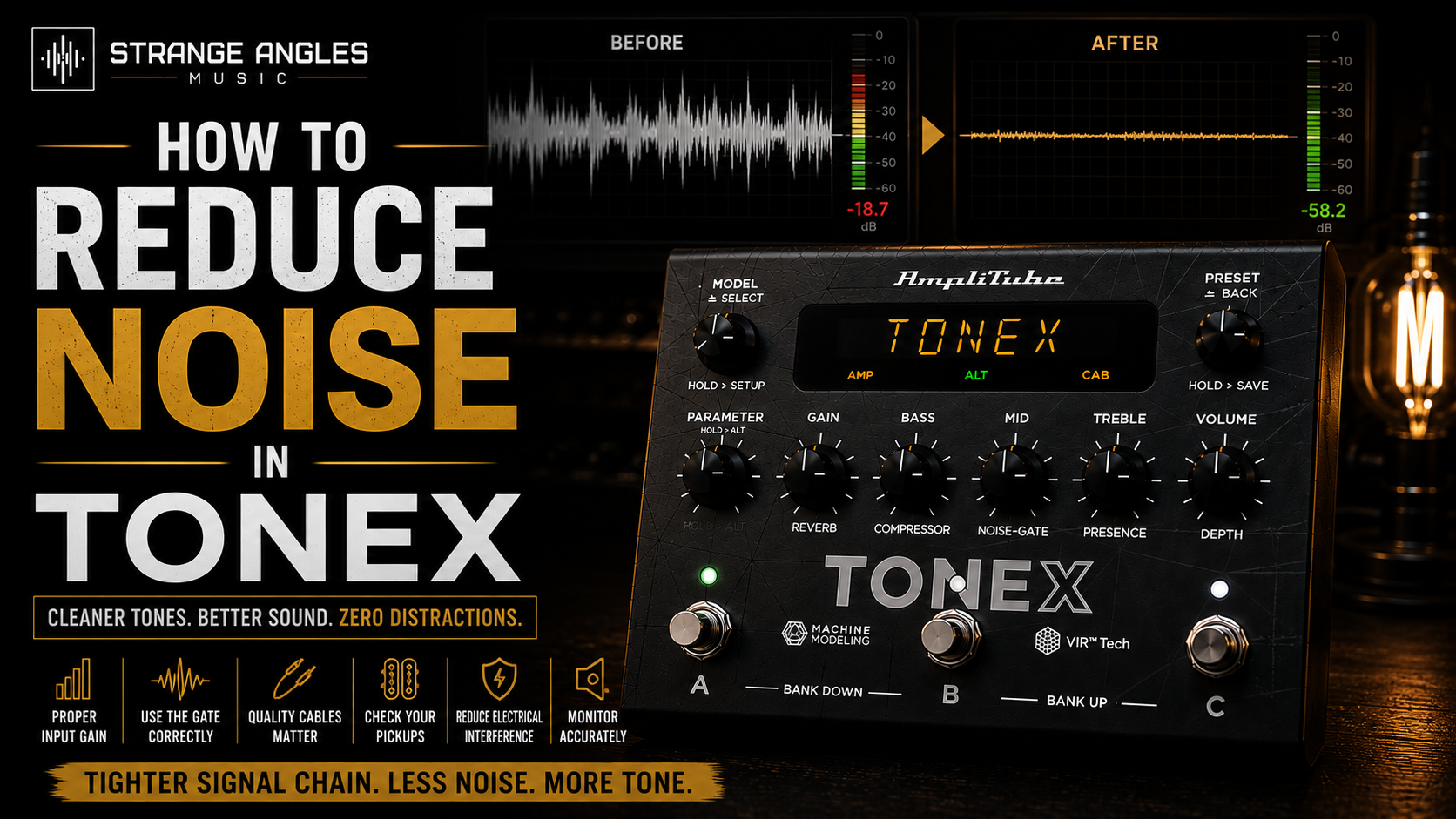
How to Reduce Noise in TONEX
Nothing ruins a great guitar tone faster than unwanted hiss, hum, or excessive background noise. While high-gain sounds naturally introduce more noise, a properly configured TONEX rig should remain quiet without sacrificing sustain or dynamics.
In this guide, you'll learn the most common causes of noise in TONEX and the best ways to eliminate them while preserving the feel of your tone.
Looking for Great Tones?
Spend less time fighting noise and more time playing. Explore professionally crafted TONEX Tone Models designed to deliver tight, responsive, low-noise guitar tones for recording and live performance.
1. Start With a High-Quality Tone Model
Not all Tone Models are captured equally.
Professionally captured Tone Models typically offer:
Lower noise floor
Better gain staging
Improved dynamics
More consistent output
Starting with a clean capture makes every other adjustment easier.
2. Check Your Input Gain
Too much input gain increases hiss and can make your Tone Model sound harsh.
Set your input so your strongest playing stays clean without clipping.
A properly set input gives you better dynamics and less unwanted noise.
3. Use the Noise Gate Correctly
The noise gate should remove idle hiss—not your sustain.
A common mistake is setting it too aggressively.
Instead:
Raise the threshold gradually.
Stop once the unwanted noise disappears.
Make sure sustained notes still ring naturally.
4. Keep Your Signal Chain Simple
Every unnecessary pedal or plugin can introduce additional noise.
A simple signal chain is often the quietest:
Noise Gate → Tone Model → Cabinet → EQ → Delay/Reverb
If you don't need a block, remove it.
5. Use Quality Cables
Faulty or poorly shielded cables are one of the biggest sources of hum and buzz.
Check:
Instrument cables
USB cables
Power supplies
Patch cables
Replacing one bad cable can completely solve a noise problem.
6. Watch Your Guitar Pickups
High-output pickups naturally generate more noise.
Single-coil pickups are also more susceptible to electrical interference than humbuckers.
If you're experiencing excessive hum, test with another guitar to isolate the source.
7. Reduce Electrical Interference
Computers, monitors, LED lights, and power adapters can introduce unwanted noise.
Try:
Moving away from monitors.
Turning off unnecessary electronics.
Using isolated power supplies.
Keeping audio and power cables separated.
8. Don't Use More Gain Than Necessary
More gain equals more noise.
Instead of turning the gain all the way up, use just enough distortion for the style you're playing.
Your tone will often become tighter, clearer, and quieter.
9. Monitor Through Quality Speakers
Cheap speakers and headphones can exaggerate hiss.
Use:
Studio monitors
FRFR speakers
Quality headphones
Accurate monitoring helps you identify the real source of unwanted noise.
10. Compare Before and After
After making adjustments:
Bypass the gate.
Compare different Tone Models.
Listen at gig volume.
Test in a backing track.
Sometimes a small change makes a dramatic difference.
Common Causes of Noise
Excessive gain
Poor cables
Aggressive gate settings
Electrical interference
Noisy pickups
Low-quality Tone Models
Incorrect input levels
Frequently Asked Questions
Why is my TONEX preset noisy?
The most common causes are high gain, pickup noise, poor cables, electrical interference, or an improperly adjusted noise gate.
Should I use a stronger noise gate?
Only if necessary. Too much gating removes sustain and dynamics, making your tone feel unnatural.
Can premium Tone Models reduce noise?
A well-made Tone Model often has better gain staging and a lower noise floor, making it easier to achieve a clean, professional sound.
Final Thoughts
A quiet guitar rig starts with good fundamentals. High-quality Tone Models, proper gain staging, quality cables, and sensible noise gate settings will eliminate most unwanted noise without compromising your tone.
Focus on building a clean signal chain first, and you'll spend less time troubleshooting and more time playing.
Ready to Upgrade Your Tone?
Explore professionally crafted TONEX Tone Models designed for tight, low-noise, mix-ready performance.