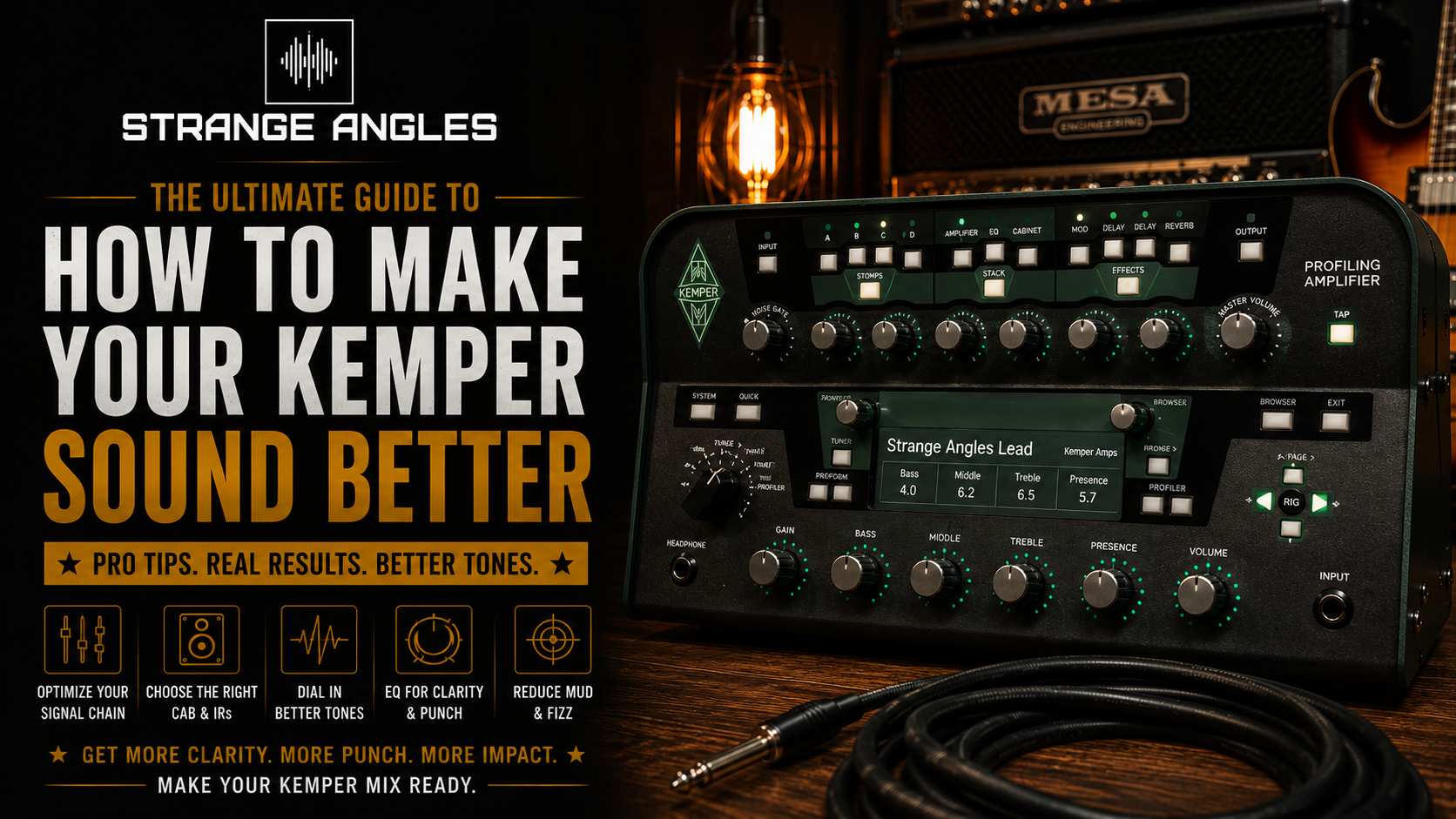
HOW TO MAKE YOUR KEMPER SOUND BETTER
If you're using a Kemper Profiler and your tone sounds harsh, muddy, thin, or lifeless, you're not alone. Many players assume the problem is the profile itself, when in reality it often comes down to a few simple settings.
In this guide, we'll cover some of the most effective ways to improve your Kemper tone and get the most from your profiles.
Looking for Great Tones?
Spend less time tweaking and more time playing. Explore professionally crafted Kemper profiles designed to deliver authentic, mix-ready guitar tones for the studio, stage, and beyond.
Start With a Great Profile
The quality of your tone begins with the profile you're using.
Even the best EQ settings can't completely transform a poor-quality profile.
Professional profiles created from well-maintained amplifiers, quality microphones, and experienced capture techniques generally require far less tweaking and tend to sit better in a mix.
Choosing a profile designed for your style of music is one of the fastest ways to improve your overall sound.
Choose the Right Cabinet
The cabinet has a huge impact on your guitar tone.
A profile that sounds harsh through one cabinet may sound incredible through another.
Don't be afraid to experiment with different cabinets or impulse responses until you find the combination that complements your guitar and playing style.
Small cabinet changes often produce much bigger improvements than adjusting amplifier EQ.
Don't Use Too Much Gain
One of the biggest mistakes guitar players make is using more gain than necessary.
Less gain often produces:
• Better note definition
• Tighter palm mutes
• Improved clarity
• Better mix translation
Many professional metal tones actually use less gain than most players expect.
Check Your Input Settings
Your guitar's pickups affect how the Kemper responds.
If your clean tones are too distorted or your high-gain tones feel compressed, reviewing your input settings can make a noticeable difference.
Taking a few minutes to match the Kemper's input to your guitar helps maintain consistent performance across different profiles.
Use a Noise Gate Carefully
A noise gate is useful for reducing unwanted noise, but using too much can make your guitar feel unnatural.
Use only as much gating as needed to eliminate excess noise while allowing sustained notes and natural dynamics to come through.
Monitor Through Good Speakers
Your monitoring system dramatically affects what you hear.
Studio monitors, FRFR speakers, quality headphones, and traditional guitar cabinets all present your tone differently.
If possible, evaluate your profiles through the same type of system you'll use most often.
Less EQ Is Often Better
It's tempting to make large EQ adjustments, but many professional profiles are designed to sound balanced with minimal tweaking.
Instead of making dramatic changes, start with small adjustments and let your ears guide you.
Best For
These tips are useful for players performing or recording:
• Modern Metal
• Metalcore
• Deathcore
• Progressive Metal
• Hard Rock
• Alternative Rock
• Post-Hardcore
• Classic Rock
• Blues
If You Like These Bands...
These tips can help you achieve tones inspired by:
• Periphery
• Architects
• Killswitch Engage
• Trivium
• Parkway Drive
• Spiritbox
• Gojira
• Lamb of God
• Bullet For My Valentine
• August Burns Red
Remember that every band's tone is unique, but starting with the right profile and making thoughtful adjustments will get you much closer.
Frequently Asked Questions
Why does my Kemper sound harsh?
Harsh tones are often caused by the cabinet, monitoring system, excessive treble, or too much gain. Experimenting with different cabinets and making small EQ adjustments usually produces better results than drastically changing amplifier settings.
Why does my Kemper sound muddy?
Excessive low end, too much gain, or an unsuitable cabinet can all contribute to muddy tones. Reducing bass, lowering the gain slightly, and trying a different cabinet often helps improve clarity.
Do expensive studio monitors make a difference?
Quality monitoring makes it easier to hear your profiles accurately, but excellent tones can still be achieved using good FRFR speakers or quality headphones.
Should I use third-party profiles?
Many players enjoy third-party profiles because they offer different amplifiers, capture techniques, and tonal options. Finding profiles that suit your playing style can make achieving great tones much easier.
Final Thoughts
Great Kemper tones don't come from endlessly tweaking settings.
They come from starting with a quality profile, using the right cabinet, making thoughtful adjustments, and listening through a reliable monitoring system.
A few small improvements often produce much better results than constantly chasing new settings.
Ready to Upgrade Your Tone?
Explore Strange Angles Music's collection of professionally crafted Kemper profiles, impulse responses, and presets designed for recording, rehearsals, and live performance.