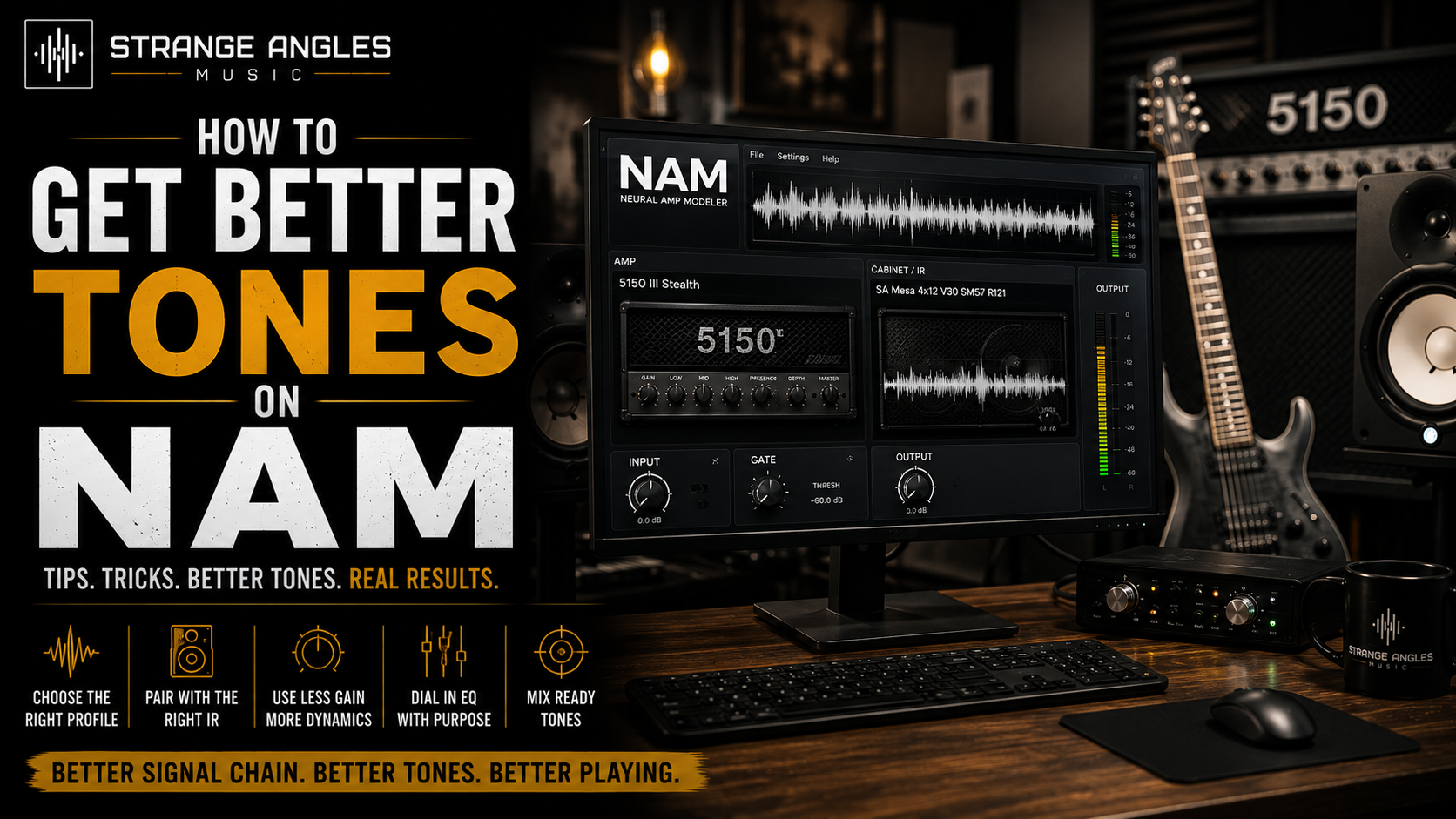
How to Get Better Tones on NAM
Neural Amp Modeler (NAM) has earned a reputation for delivering incredibly realistic amp captures, but getting professional-quality guitar tones still depends on more than simply loading a profile.
If your sound feels muddy, harsh, thin, or uninspiring, the problem usually isn't NAM itself—it's your overall signal chain.
In this guide, you'll learn practical tips to improve your tones on NAM, whether you're recording, practicing, or playing live.
Looking for Great Tones?
Spend less time tweaking and more time playing. Explore professionally crafted NAM Profiles designed to deliver authentic, mix-ready guitar tones for recording, live performance, and modern metal.
1. Start With a High-Quality Profile
Everything starts with the profile.
A professionally captured NAM profile generally offers:
Better dynamics
Lower noise
More realistic amp feel
Better gain structure
Improved note separation
The closer the profile is to your ideal tone, the less you'll need to tweak.
2. Pair It With the Right IR
A NAM profile only captures the amplifier.
Your impulse response plays an enormous role in the final sound.
Popular speaker choices include:
Celestion Vintage 30
Celestion Greenback
Eminence DV-77
Celestion Creamback
Changing the IR often has a bigger impact than changing the profile.
3. Use Less Gain
One of the most common mistakes is using too much distortion.
Reducing gain often improves:
Clarity
Palm mutes
Pick attack
Note definition
Heavy tones come from tightness—not maximum saturation.
4. Watch Your Input Level
Incorrect input gain can make great profiles sound harsh or lifeless.
Avoid clipping and maintain consistent levels for the most natural response.
5. Keep Your Signal Chain Simple
A great starting point is:
Noise Gate → NAM Profile → IR → EQ → Delay/Reverb
Only add effects when they improve your tone.
6. Build Your Tone in a Mix
Never judge a guitar tone by itself.
Play along with:
Drums
Bass
Backing tracks
Full mixes
Great mix tones often sound less exciting when played alone.
7. Monitor Accurately
Use:
Studio monitors
FRFR speakers
Quality headphones
Poor monitoring can make you chase problems that don't actually exist.
8. Stop Chasing Tiny Adjustments
Many players spend hours making changes that are barely audible.
Once your tone is:
Tight
Dynamic
Clear
Inspiring
Start making music.
Common Mistakes
Avoid:
Too much gain
Poor IR selection
Excessive EQ
Comparing at different volumes
Judging tones without a mix
Endless tweaking
Frequently Asked Questions
Why doesn't my NAM profile sound like the demo?
Your guitar, pickups, IR, monitoring system, and playing style all influence the final result.
Do I need premium IRs?
A quality IR can make a dramatic difference, especially when paired with a great NAM profile.
Can NAM sound like a real tube amp?
Yes. High-quality captures paired with the right IR can deliver remarkably authentic amp tones.
Final Thoughts
Getting great tones on NAM isn't about downloading hundreds of profiles—it's about building a balanced signal chain around a profile that already sounds excellent.
Choose a quality profile, pair it with a great IR, make small adjustments, and spend more time playing than tweaking.
Ready to Upgrade Your Tone?
Explore professionally crafted NAM Profiles designed to deliver authentic, mix-ready guitar tones with minimal tweaking.