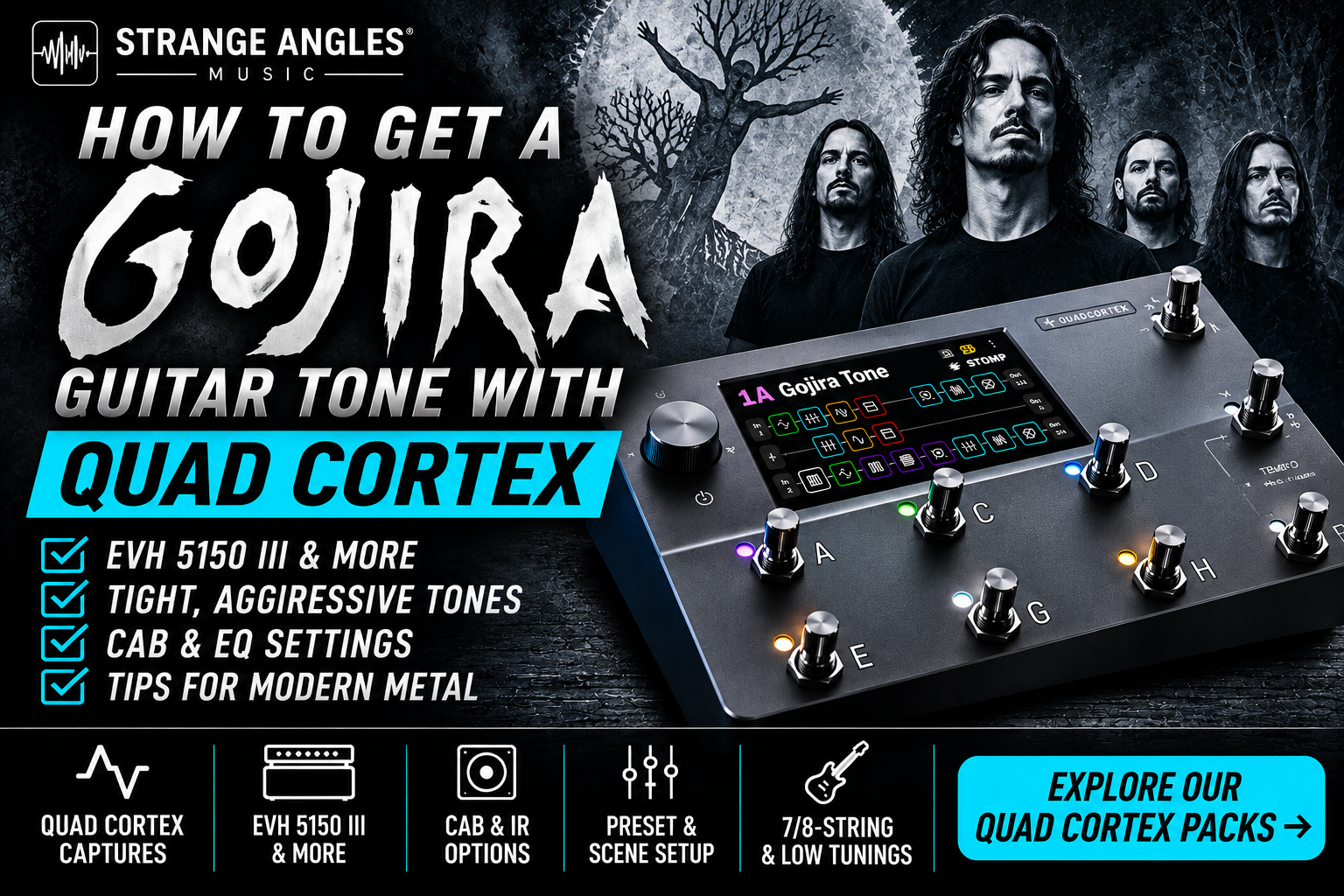
How to Get a Gojira Guitar Tone with Quad Cortex
Want to get the crushing, aggressive guitar tones of Gojira using the Neural DSP Quad Cortex?
Gojira has developed one of the most recognizable guitar sounds in modern metal. Combining massive riffs, aggressive distortion, unusual rhythmic patterns, and powerful low-tuned guitars, their sound is both heavy and remarkably articulate.
Guitarist Joe Duplantier has frequently used the EVH 5150 III, an amplifier known for its aggressive high-gain character and tight response.
The good news is that you can explore this type of amplifier tone using the Quad Cortex and professionally captured amplifiers without needing the original hardware.
In this guide, we'll look at the amplifiers worth exploring, how to build a Gojira-inspired signal chain, and how to get that aggressive, punchy modern metal sound using your Quad Cortex.
Looking for Great Quad Cortex Tones?
Explore professionally captured high-gain amplifiers designed for modern metal, groove metal, progressive metal, and aggressive rhythm guitar.
From EVH 5150 III and Fortin to Omega, Randall, and more, Strange Angles Music offers professionally captured tones for your Quad Cortex.
🎸 Browse Quad Cortex Captures →
What Makes the Gojira Guitar Tone So Distinctive?
Gojira's guitar sound is built around aggression, precision, and dynamics.
Rather than relying on excessive effects or complicated signal chains, much of the band's signature sound comes from the amplifier, guitar, and playing technique.
Some of the defining characteristics include:
Aggressive high-gain distortion
Tight, punchy palm-muted riffs
Strong midrange presence
Clear low-frequency response
Powerful pick attack
Unusual rhythmic patterns and stops
Natural harmonics and pick-scrape techniques
One important characteristic is that the guitars need to remain articulate even when playing extremely heavy riffs.
A good Gojira-inspired tone should sound powerful and aggressive without becoming overly compressed or muddy.
The EVH 5150 III: A Great Starting Point
The EVH 5150 III is one of the most relevant amplifiers to explore when building a Gojira-inspired guitar tone.
Joe Duplantier has discussed using EVH 5150 III amplifiers, including EL34 and 6L6 versions. He has also spoken about using a modified 5150 III Stealth.
The amplifier is known for its aggressive gain structure, strong midrange, and ability to produce tight modern metal tones.
It's a great starting point for:
Heavy rhythm guitar
Modern metal
Groove metal
Progressive metal
Aggressive palm-muted riffs
High-gain lead tones
The important thing is not simply adding more gain. You want an amplifier that responds well to your picking and keeps the low frequencies controlled.
With a Quad Cortex capture of the EVH 5150 III, you can explore this type of sound without owning the original amplifier.
How to Get a Gojira-Inspired Tone Using Quad Cortex
Once you've selected your amplifier capture, you can build the rest of your signal chain around it.
Here's how I'd approach the setup.
1. Start With an EVH 5150 III Capture
Begin with a D.I. capture of the EVH 5150 III.
This gives you the amplifier's core tonal character while allowing you to experiment with different cabinet IRs or Quad Cortex cabinet blocks.
Start with the capture before making major EQ adjustments.
Listen for:
Tight palm mutes
Strong pick attack
Aggressive midrange
Defined low notes
Good note separation
The amplifier should already sound aggressive before you start adding additional processing.
2. Don't Automatically Add an Overdrive
One interesting aspect of Joe Duplantier's approach is his relatively simple signal chain.
He has described relying heavily on the amplifier itself for distortion rather than stacking multiple overdrive pedals in front of it.
For your Quad Cortex setup, start with the EVH capture on its own.
If you want a tighter response, experiment with a Tube Screamer-style boost or another overdrive, but don't assume you need one.
Sometimes the best result comes from letting the amplifier do the work.
3. Choose the Right Cabinet
The cabinet has a major influence on the final guitar tone.
A 4x12 cabinet with Celestion Vintage 30-style speakers is a useful starting point for modern metal.
Experiment with different microphone positions and blends.
A microphone placed closer to the center of a speaker generally produces a brighter sound, while moving toward the outer portion can produce a smoother response.
If you're using a D.I. capture, add a suitable cabinet IR or cabinet block.
If you're using a full-rig capture, it may already contain the cabinet and microphone coloration. Avoid adding another cabinet stage unless you intentionally want to change the sound.
4. Keep the Low End Tight
Gojira's guitar sound has plenty of weight, but the low frequencies need to remain controlled.
If your palm mutes sound loose or muddy, try:
Reducing excessive bass
Adjusting the cabinet IR
Using a suitable boost if necessary
Reducing unnecessary gain
Applying subtle post-capture EQ
Don't try to make the guitar produce all the low-frequency weight in the mix.
The bass guitar and kick drum should provide much of the foundation.
5. Preserve the Midrange
A strong midrange helps the guitar cut through a dense metal mix.
Avoid removing too much midrange in an attempt to make the guitar sound heavier.
Instead, focus on balancing the low mids and upper mids.
If the tone sounds harsh, make smaller adjustments to the frequencies causing the problem rather than scooping the entire midrange.
6. Use a Noise Gate
A noise gate helps control unwanted noise between riffs and during rhythmic stops.
Start with a moderate threshold and adjust it until the noise is controlled without cutting off sustained notes.
Too much gating can make the guitar sound unnatural.
Recommended Quad Cortex Signal Chain for a Gojira-Inspired Tone
Here's a practical starting point.
High-Gain Rhythm Chain
Noise Gate
EVH 5150 III Neural Capture
Cabinet IR or Cab Block
Optional Post-EQ
Output
Alternative Boosted Chain
Noise Gate
Overdrive / Boost
EVH 5150 III Neural Capture
Cabinet IR or Cab Block
Optional Post-EQ
Output
Start with the simpler chain first. Add processing only when you hear a reason for it.
Other Amplifiers Worth Trying for Gojira-Inspired Tones
Although the EVH 5150 III is an excellent starting point, there are several other amplifiers worth exploring.
Fortin Evil Pumpkin
A great option for aggressive modern metal tones.
Its high-gain character makes it useful for tight rhythm guitar, heavy palm mutes, and aggressive lead sounds.
Omega Granophyre
The Granophyre is worth exploring if you want a modern high-gain sound with strong articulation and a tight response.
Try it for progressive metal, groove metal, and low-tuned rhythm guitar.
Randall Satan
An aggressive high-gain amplifier worth experimenting with for heavy rhythm tones and low-tuned riffs.
Omega Obsidian 1.5
Another modern high-gain option with a different character from the Granophyre.
Driftwood Purple Nightmare
A good alternative if you're looking for a thick, aggressive sound with plenty of saturation.
These aren't intended to reproduce one specific Gojira recording. They're alternative amplifier choices for building your own aggressive modern metal tone.
Best Quad Cortex Packs for Gojira-Inspired Guitar Tones
If you're looking for high-gain amplifier captures, these Strange Angles Music collections are worth checking out.
1. Metal Essential – Quad Cortex Pack
The Metal Essential Quad Cortex Pack is a great starting point for players looking for aggressive modern and classic high-gain amplifier tones.
It includes:
15 D.I. amp captures
6 amp and cabinet captures
Approximately 12 D.I. overdrive captures
Featured amplifiers include:
EVH 5150 III
ENGL Savage
ENGL Powerball
Marshall JVM
Mesa/Boogie Dual Rectifier
The pack also includes overdrive captures from Horizon Devices, Maxon, and Fortin.
The EVH 5150 III makes this collection particularly relevant for guitarists chasing a Gojira-inspired sound.
Best for: Modern metal, groove metal, progressive metal, metalcore, and aggressive rhythm guitar.
Explore Metal Essential – Quad Cortex Pack →
2. Quad Cortex – Everything Pack
If you want a much larger selection of amplifier captures, the Quad Cortex Everything Pack includes over 150 D.I. and studio captures.
Featured amplifiers include:
Fortin Evil Pumpkin
Fortin Meshuggah 2.0
Omega Ampworks Granophyre
Omega Ampworks Obsidian 1.5
RedSeven Duality
RedSeven Leviathan
Dover DA 50
Driftwood Purple Nightmare
Randall Satan
Science Hellhawk
Science Mother
Fryette Deliverance
EVH 5150 III
ENGL Savage
ENGL Powerball
Marshall JVM
Dimebag Darrell Warhead Mini
It also includes preamp captures, overdrives, and additional amplifier tones.
Best for: Guitarists who want a wide selection of modern and classic high-gain amplifiers in one collection.
Explore Quad Cortex Everything Pack →
How to Make Your Gojira-Inspired Tone Sound Better in a Mix
Getting a great guitar tone by itself is only part of the process.
Gojira's music combines powerful guitars with bass, drums, vocals, and dynamic arrangements.
Here are some tips to help your Quad Cortex tone translate into a professional metal mix.
Double-Track Your Rhythm Guitars
Record two separate performances of the same guitar part.
Pan one performance left and the other right.
This creates a wide stereo image and helps the guitars sound much bigger.
Avoid simply duplicating one recorded performance.
Focus on Pick Attack
A big part of Gojira's sound comes from the physical attack of the strings.
Consistent picking, palm muting, and muting technique are essential.
The amplifier capture can help, but it cannot replace good playing technique.
Don't Overdo the Gain
Too much distortion can make the guitar sound less defined.
Try lowering the gain until individual notes and palm mutes become easier to distinguish.
Keep the Low End Under Control
Avoid excessive bass in the guitar signal.
Let the bass guitar provide additional low-frequency weight while the guitars focus on attack, definition, and midrange.
Experiment With Natural Harmonics and Pick Scrapes
Gojira's sound is not just about the amplifier.
Joe Duplantier is known for incorporating pick scrapes, pinch harmonics, string noise, and unusual playing techniques into riffs.
Experimenting with these techniques can help give your playing more of that distinctive character.
Frequently Asked Questions
What amplifier does Gojira guitarist Joe Duplantier use?
Joe Duplantier has used different amplifiers throughout his career, including EVH 5150 III amplifiers in EL34 and 6L6 versions. He has also discussed using the 5150 III Stealth.
Can I get a Gojira guitar tone with Quad Cortex?
Yes. You can use a capture of the EVH 5150 III as a starting point for building a Gojira-inspired guitar tone.
Your guitar, tuning, cabinet, EQ, and playing technique will all influence the final sound.
What makes the Gojira guitar tone so heavy?
The sound combines aggressive high-gain amplification, tight low frequencies, strong pick attack, and precise playing technique.
The amplifier is important, but the way the guitar parts are played is equally important.
Do I need an overdrive with an EVH 5150 III capture?
No. Start with the amplifier capture by itself. You can add an overdrive or boost if you want a tighter response, but it isn't always necessary.
Do I need a cabinet IR with a Quad Cortex D.I. capture?
Generally, yes. D.I. amp captures need a cabinet stage to complete the guitar tone. You can use a cabinet IR or a suitable cabinet block.
Full-rig captures may already include cabinet and microphone coloration.
Can I use these captures for groove metal and progressive metal?
Absolutely. The EVH 5150 III and other high-gain amplifiers can be useful for groove metal, progressive metal, modern metal, metalcore, and other aggressive guitar styles.
Final Thoughts
Gojira's guitar tone is built around aggression, precision, and dynamics.
The EVH 5150 III is an excellent starting point for exploring this sound, especially when paired with a suitable cabinet and a carefully balanced signal chain.
Start with the amplifier capture, keep the low end controlled, avoid excessive gain, and focus on your picking and muting technique.
With the right captures and a little experimentation, you can build a powerful Gojira-inspired modern metal tone using your Quad Cortex.
Find Your Next Quad Cortex Guitar Tone
Explore the Strange Angles Music Quad Cortex collection and discover professionally captured amplifiers for modern metal, groove metal, progressive metal, and more.