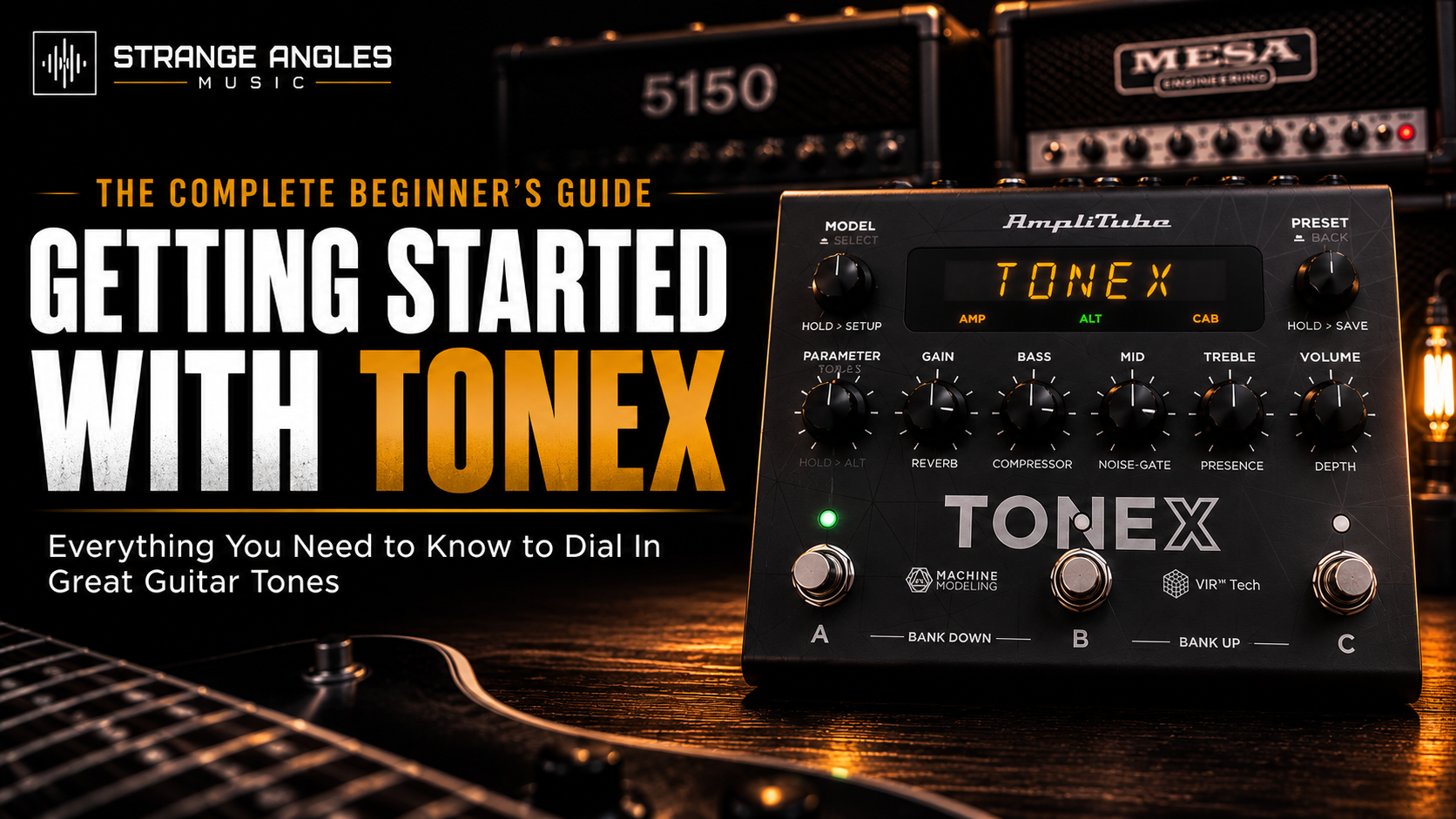
Capturing Your Own TONEX Tone Models: A Step-by-Step Guide
One of TONEX's most powerful features is the ability to capture your own amplifiers. Instead of relying only on downloadable Tone Models, you can preserve the sound and feel of your favorite amp, pedal, or complete signal chain for recording, rehearsals, and live performance.
Whether you own a prized tube amp or simply want to create your own library of custom tones, this guide walks you through the process of capturing high-quality TONEX Tone Models.
Looking for Great Tones?
Want professional-quality tones without spending hours capturing your own gear? Explore professionally crafted TONEX Tone Models designed for authentic, mix-ready performance.
What Is a TONEX Tone Model?
A Tone Model is a digital capture of an amplifier, pedal, or amp-and-cabinet setup. Instead of recreating an amp using traditional modeling, TONEX analyzes how the gear responds across a wide range of signals and builds a model that closely mirrors the original.
The quality of the finished Tone Model depends heavily on the capture process.
What You'll Need
Before you begin, gather the essentials:
A compatible audio interface
TONEX software
Your amplifier or pedal
Speaker cabinet (if capturing an amp with a cab)
A load box (if capturing without a speaker)
Quality instrument and speaker cables
A quiet recording environment
Double-check every connection before starting the capture.
Prepare Your Amplifier
Start with the exact settings you want to preserve.
Avoid changing:
Gain
EQ
Master volume
Presence
Resonance
Once the capture begins, consistency is key.
If you're creating multiple Tone Models, document your settings so they're easy to recreate later.
Eliminate Unwanted Noise
Background noise becomes part of the capture.
Before you start:
Remove unnecessary pedals.
Turn off noisy electronics.
Use quality cables.
Minimize electrical interference.
Let tube amps warm up fully.
A cleaner signal produces a better Tone Model.
Capture Multiple Variations
Rather than capturing only one sound, create a complete collection.
Examples include:
Clean
Edge of breakup
Crunch
Rhythm
Lead
Boosted
Unboosted
Offering several gain levels gives you more flexibility later.
Compare the Capture to the Original
After the capture is complete, switch back and forth between the original amp and the Tone Model.
Listen for:
Pick attack
Low-end response
Sustain
Dynamic feel
High-frequency detail
Noise floor
If something feels off, don't hesitate to capture again.
Organize Your Tone Models
Good organization saves time.
Use consistent naming such as:
5150 III Blue – Gain 5
JCM800 Crunch – Boosted
Rectifier Modern – Lead
Clear names make it much easier to build presets later.
Test Through Different Monitoring Systems
Don't judge your capture on one playback system.
Try it through:
Studio monitors
Quality headphones
FRFR speakers
Your live performance setup
A great Tone Model should translate well across multiple systems.
Common Mistakes
Avoid these common pitfalls:
Capturing noisy amplifiers
Changing amp settings during the process
Using worn cables
Ignoring gain staging
Creating only one capture
Failing to compare against the original amp
Frequently Asked Questions
Can I capture pedals with TONEX?
Yes. TONEX can capture many overdrive, distortion, fuzz, and preamp pedals in addition to full amplifiers.
How long does a capture take?
The capture process itself is relatively quick, but careful preparation and comparison often take longer than the capture.
Can I capture an amp without a speaker cabinet?
Yes. Many players use a suitable reactive load box to safely capture an amplifier without miking a cabinet.
Should I create multiple Tone Models?
Absolutely. Capturing clean, crunch, rhythm, and lead variations gives you far more flexibility than relying on a single capture.
Final Thoughts
Creating your own TONEX Tone Models is one of the best ways to preserve the unique sound of your favorite gear. With careful preparation, a clean signal, and attention to detail, you can build a personal library of tones that are consistent, reliable, and ready for recording or live performance.
Even if you eventually rely on professionally captured Tone Models, understanding the capture process will help you recognize what makes a truly great Tone Model.
Ready to Upgrade Your Tone?
Explore professionally crafted TONEX Tone Models built for players who want authentic amp tone without the trial and error.