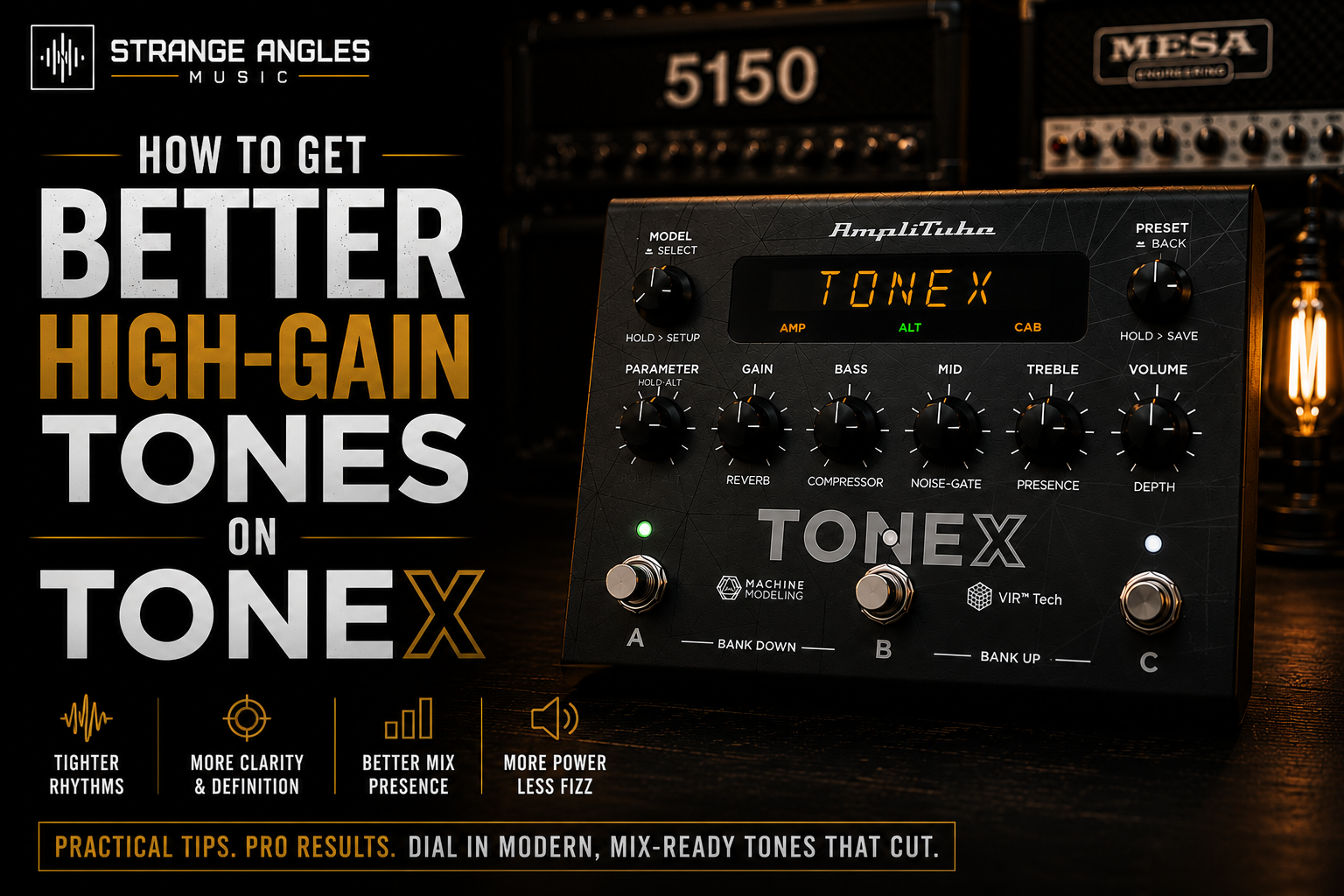
How to Get Better High-Gain Tones on TONEX
High-gain guitar tones are some of the most rewarding—and frustrating—to dial in. It's easy to end up with a sound that's fizzy, muddy, overly compressed, or buried in the mix. Fortunately, achieving tight, aggressive, professional-sounding tones on TONEX isn't about adding more gain. It's about making the right decisions throughout your signal chain.
In this guide, you'll learn how to build crushing high-gain tones that stay tight, articulate, and mix-ready whether you're recording, rehearsing, or playing live.
Looking for Great Tones?
Spend less time tweaking and more time playing. Explore professionally crafted TONEX Tone Models designed to deliver authentic, mix-ready guitar tones for modern metal, hard rock, and beyond.
1. Start With a Great High-Gain Tone Model
Everything begins with the Tone Model.
Trying to force a mediocre capture into a great tone usually leads to endless EQ adjustments and frustration.
Look for Tone Models that already have:
Tight low end
Clear pick attack
Low noise
Strong note definition
Natural dynamics
A great Tone Model should sound impressive before adding effects or EQ.
2. Use Less Gain Than You Think
One of the biggest mistakes guitar players make is maxing out the gain.
Too much distortion can:
Blur fast riffs
Reduce note separation
Soften palm mutes
Create unwanted fizz
Make your guitar disappear in a mix
Many professional metal tones use moderate gain while relying on tight playing and a good Tone Model for impact.
3. Choose the Right Cabinet
Your cabinet shapes your tone just as much as the amp.
Popular choices for modern high-gain tones include:
Celestion Vintage 30
Eminence DV-77
Celestion Creamback
Celestion G12T-75
Experiment with different cabinets before making drastic EQ changes. Often, changing the speaker produces a bigger improvement than changing the amp settings.
4. Tighten the Low End
Too much bass is one of the quickest ways to make a high-gain tone sound muddy.
Instead:
Keep bass controlled.
Let the bass guitar handle the lowest frequencies.
Focus on punch rather than sheer low-end volume.
A tighter low end results in heavier, more articulate rhythm guitars.
5. Don't Scoop the Mids
Scooping mids might sound exciting when you're playing alone, but it usually causes your guitar to disappear in a full mix.
Strong mids help your guitar:
Cut through drums
Sit above the bass
Improve note clarity
Feel larger without adding more gain
Many iconic metal tones use far more mids than players realize.
6. Control Fizz
Fizz is one of the most common complaints with high-gain tones.
To reduce harsh top-end:
Choose a better cabinet or IR.
Reduce excessive presence.
Make small EQ adjustments instead of drastic cuts.
Compare your tone within a full mix.
Often the cabinet choice—not the amp—is responsible for excessive fizz.
7. Set Your Noise Gate Carefully
A properly adjusted noise gate keeps your rig quiet without choking sustain.
Too much gating can:
Make leads feel unnatural
Reduce sustain
Remove dynamics
Hurt fast legato playing
Use only enough gating to eliminate unwanted noise between notes.
8. Compare Your Tone in a Mix
A great solo tone doesn't always become a great recording tone.
Always test your presets with:
Backing tracks
Full mixes
Drums
Bass guitar
Your goal is to create a tone that complements the mix—not dominates it.
9. Match Your Output Levels
Louder almost always sounds better.
Before deciding which preset you prefer:
Match output volume.
Compare at equal loudness.
Listen for clarity instead of volume.
Balanced comparisons help you make better decisions.
10. Stop Tweaking
Many guitarists spend hours adjusting tiny settings that make little difference.
Once your tone feels:
Tight
Clear
Dynamic
Comfortable to play
Start making music.
The best tones come from playing—not endless editing.
Common High-Gain Mistakes
Avoid these common problems:
Using excessive gain
Scooping too many mids
Ignoring cabinet choice
Overusing EQ
Too much noise gate
Judging tones without a mix
Chasing volume instead of clarity
Frequently Asked Questions
Why does my TONEX tone sound fizzy?
The cabinet, presence settings, monitoring system, or excessive gain are often the primary causes. Before making major EQ cuts, try a different cabinet or Tone Model.
What is the best gain setting for metal?
There isn't a universal setting, but most professional rhythm tones use less gain than many players expect. Start lower and increase only if needed.
Should I boost the front of my amp?
Many high-gain players use an overdrive pedal to tighten the low end and improve pick attack. Whether it's necessary depends on the Tone Model and your playing style.
Can I use the same preset live and in the studio?
You can, but many players create separate presets with slight EQ and output adjustments for each environment.
Final Thoughts
Great high-gain tones don't come from maxing out every control. They come from choosing the right Tone Model, pairing it with the right cabinet, using appropriate gain, and making small, thoughtful adjustments.
Once your tone is tight, articulate, and inspiring to play, resist the urge to keep tweaking. Spend your time writing riffs, recording songs, and enjoying your guitar.
Ready to Upgrade Your Tone?
Explore professionally crafted TONEX Tone Models built to deliver tight, aggressive, mix-ready high-gain tones with minimal tweaking.