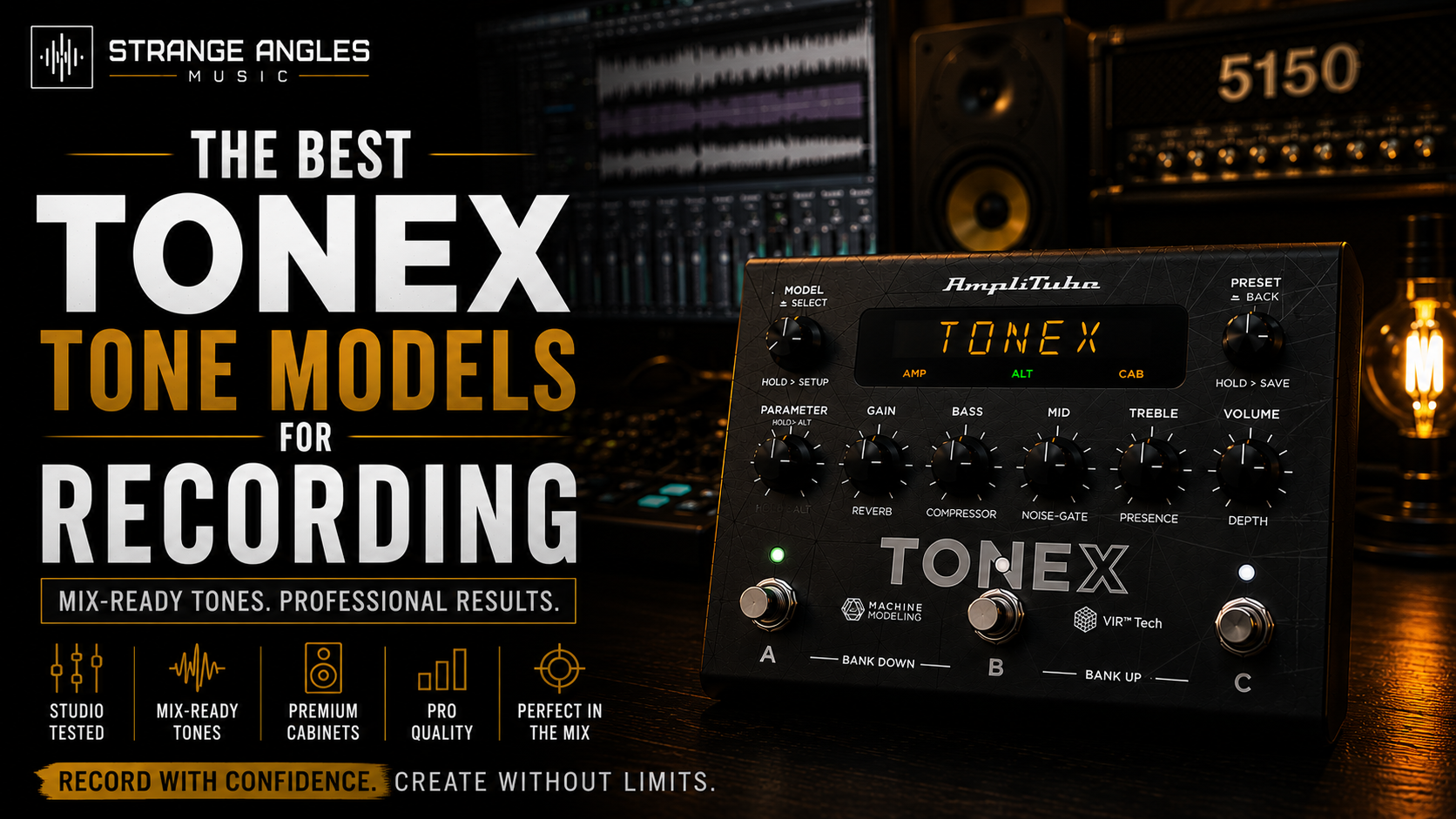
Best TONEX Tone Models for Recording
Recording guitar has never been easier, but getting a polished, album-ready tone still starts with choosing the right amp. Whether you're tracking modern metal, hard rock, blues, or classic rock, the right TONEX Tone Model can dramatically reduce the amount of EQ and processing needed during mixing.
In this guide, we'll cover what makes a great recording Tone Model, the best amplifier types for studio use, and how to build a signal chain that delivers professional results.
Looking for Great Tones?
Spend less time tweaking and more time recording. Explore professionally crafted TONEX Tone Models designed to deliver authentic, mix-ready guitar tones straight into your DAW.
Why Recording Tone Is Different
A guitar tone that sounds huge by itself doesn't always work in a mix.
Recording tones should be:
Tight
Clear
Balanced
Dynamic
Easy to mix
Less gain and a controlled low end often produce better recordings than oversized, bass-heavy tones.
Best Amp Styles for Recording
EVH 5150 III
One of the easiest high-gain amps to mix.
Excellent for:
Metalcore
Modern Metal
Hard Rock
Peavey 6505
Aggressive mids and excellent note definition.
Perfect for:
Death Metal
Thrash
Hardcore
Mesa Dual Rectifier
Huge low end with an unmistakable character.
Ideal for:
Nu Metal
Alternative Metal
Heavy Rock
Marshall JCM800
A recording classic.
Fantastic for:
Classic Rock
80s Rock
Punk
Hard Rock
Friedman BE-100
A modern British amp capable of everything from classic crunch to saturated lead tones.
Start With a Great Tone Model
Professional Tone Models generally offer:
Better gain staging
Lower noise
More realistic dynamics
Consistent levels
Mix-ready frequency balance
Starting with a quality Tone Model means less corrective EQ later.
Pair It With the Right Cabinet
The cabinet has just as much impact as the amplifier.
Popular recording speakers include:
Celestion Vintage 30
Celestion Greenback
Eminence DV-77
Celestion Creamback
Experiment before reaching for EQ.
Double-Track Your Guitars
One guitar rarely creates the huge wall of sound heard on professional recordings.
Double-track rhythm guitars whenever possible.
Record separate performances rather than copying the same take.
Use Less Gain
One of the biggest recording mistakes is excessive distortion.
Lower gain provides:
Better clarity
Stronger palm mutes
Cleaner mixes
Better note separation
Monitor Accurately
Good monitoring leads to better decisions.
Use:
Studio monitors
Quality headphones
Reference tracks
Avoid relying solely on laptop or multimedia speakers.
Frequently Asked Questions
What is the best TONEX Tone Model for recording?
There isn't a single best option, but professionally captured models based on the EVH 5150 III, Peavey 6505, Mesa Dual Rectifier, Marshall JCM800, and Friedman BE-100 are consistently popular for studio work.
Should I use an IR?
Many players achieve excellent results by pairing a great Tone Model with a premium IR that complements the amp.
Should I EQ while recording?
Small adjustments are fine, but it's usually best to capture a balanced tone and make detailed EQ decisions during mixing.
Final Thoughts
The best recording tones begin long before you press record. A quality Tone Model, paired with the right cabinet and sensible gain settings, will save time during mixing and help your guitar sit naturally in the track.
Focus on clarity, dynamics, and balance rather than chasing the biggest solo tone.
Ready to Upgrade Your Tone?
Explore professionally crafted TONEX Tone Models built for recording musicians who demand authentic, mix-ready guitar sounds.