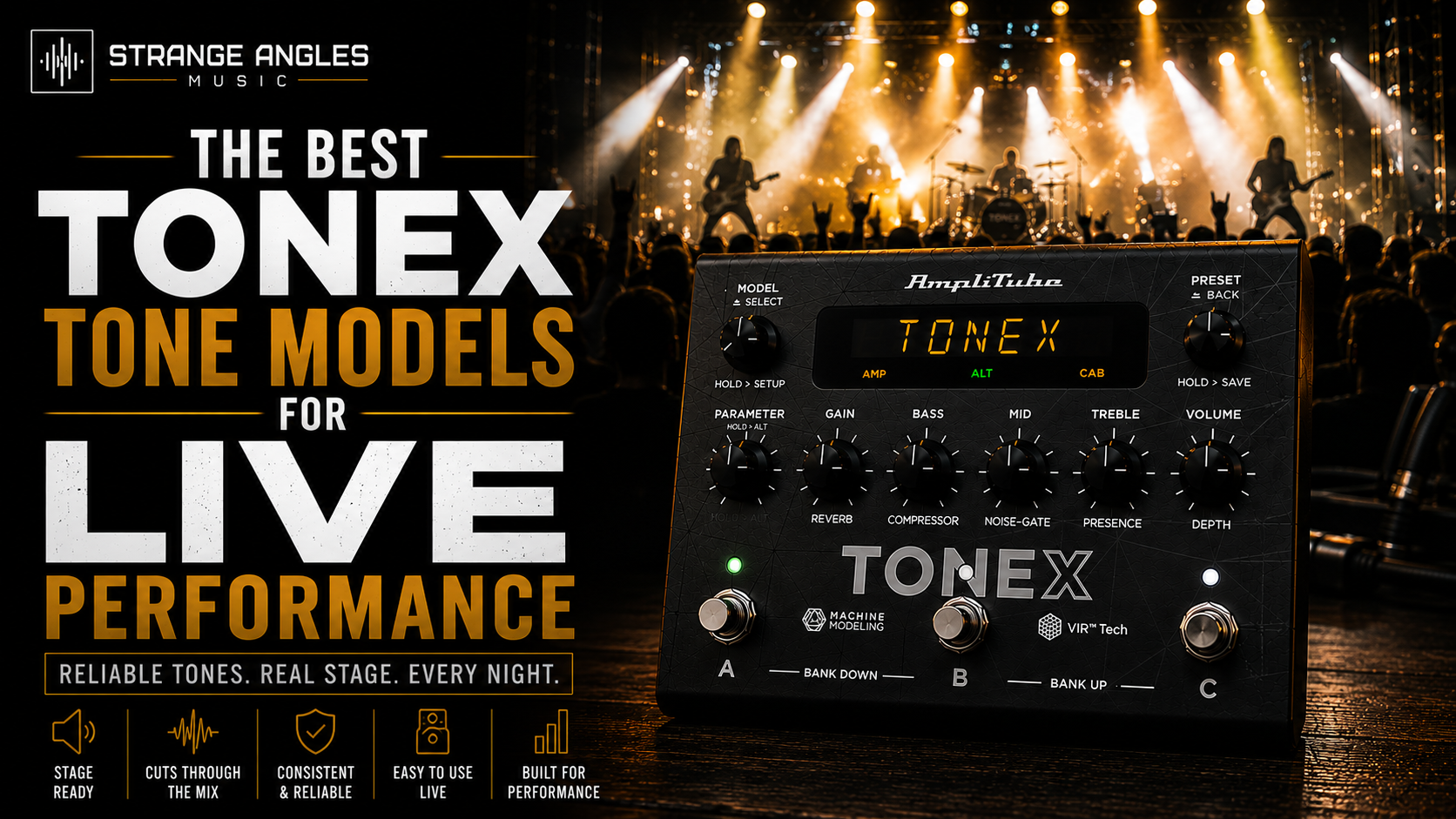
Best TONEX Tone Models for Live Performance
When you're playing live, consistency matters just as much as great tone. A preset that sounds incredible in the studio doesn't always translate well through a PA system or FRFR speaker.
The best TONEX Tone Models for live performance are dynamic, easy to mix, and responsive under real-world playing conditions. In this guide, we'll cover what makes a great live Tone Model, which amp styles work best on stage, and how to build dependable presets you can trust night after night.
Looking for Great Tones?
Spend less time tweaking and more time performing. Explore professionally crafted TONEX Tone Models designed to deliver authentic, stage-ready guitar tones with minimal setup.
What Makes a Great Live Tone Model?
A live preset should be:
Consistent at any volume
Tight in the low end
Clear in a full band mix
Responsive to your picking dynamics
Easy to switch between rhythm and lead
Remember, the audience hears your guitar in the context of the full band—not by itself.
Best Amp Styles for Live Performance
EVH 5150 III
One of the most dependable modern metal amps for live use.
Perfect for:
Metalcore
Modern Metal
Hard Rock
Peavey 6505
Aggressive mids and tight attack make it ideal for loud stages.
Mesa Dual Rectifier
Massive rhythm tone with enough character to fill the room.
Marshall JCM800
Cuts through a live mix with ease and excels in classic rock and hard rock settings.
Friedman BE-100
Versatile enough for everything from crunchy rhythm to soaring leads.
Build Presets at Stage Volume
A preset built quietly at home often sounds very different through an FRFR cabinet or PA.
Whenever possible:
Rehearse at gig volume.
Make small EQ adjustments.
Save separate live versions of your presets.
Control the Low End
Too much bass can make your guitar disappear in a live mix.
Instead:
Tighten the lows.
Let the bass guitar occupy the deepest frequencies.
Focus on punch rather than boom.
Don't Overdo the Effects
Large amounts of delay and reverb may sound great alone but can quickly become muddy on stage.
For rhythm tones:
Keep reverb subtle.
Reserve delay for lead presets.
Let the amp tone remain the focus.
Match Preset Volumes
One preset shouldn't jump out louder than the next.
Check:
Rhythm vs. lead levels
Clean vs. high-gain presets
Solo boosts
Balanced output makes live performance much smoother.
Frequently Asked Questions
Are TONEX Tone Models good for live performance?
Yes. High-quality Tone Models can deliver consistent, professional guitar tones through FRFR speakers, power amps, or front-of-house systems.
Should I create separate live and studio presets?
In most cases, yes. Small EQ and output adjustments can make live presets sit better in a band mix.
What's the best speaker for live use?
Many players pair TONEX with FRFR speakers or quality power amp/cabinet setups for accurate, consistent performance.
Final Thoughts
The best live guitar tones aren't necessarily the biggest or the most saturated—they're the ones that stay clear, cut through the mix, and inspire confidence every time you step on stage.
Build simple, reliable presets, test them at performance volume, and let your playing do the rest.