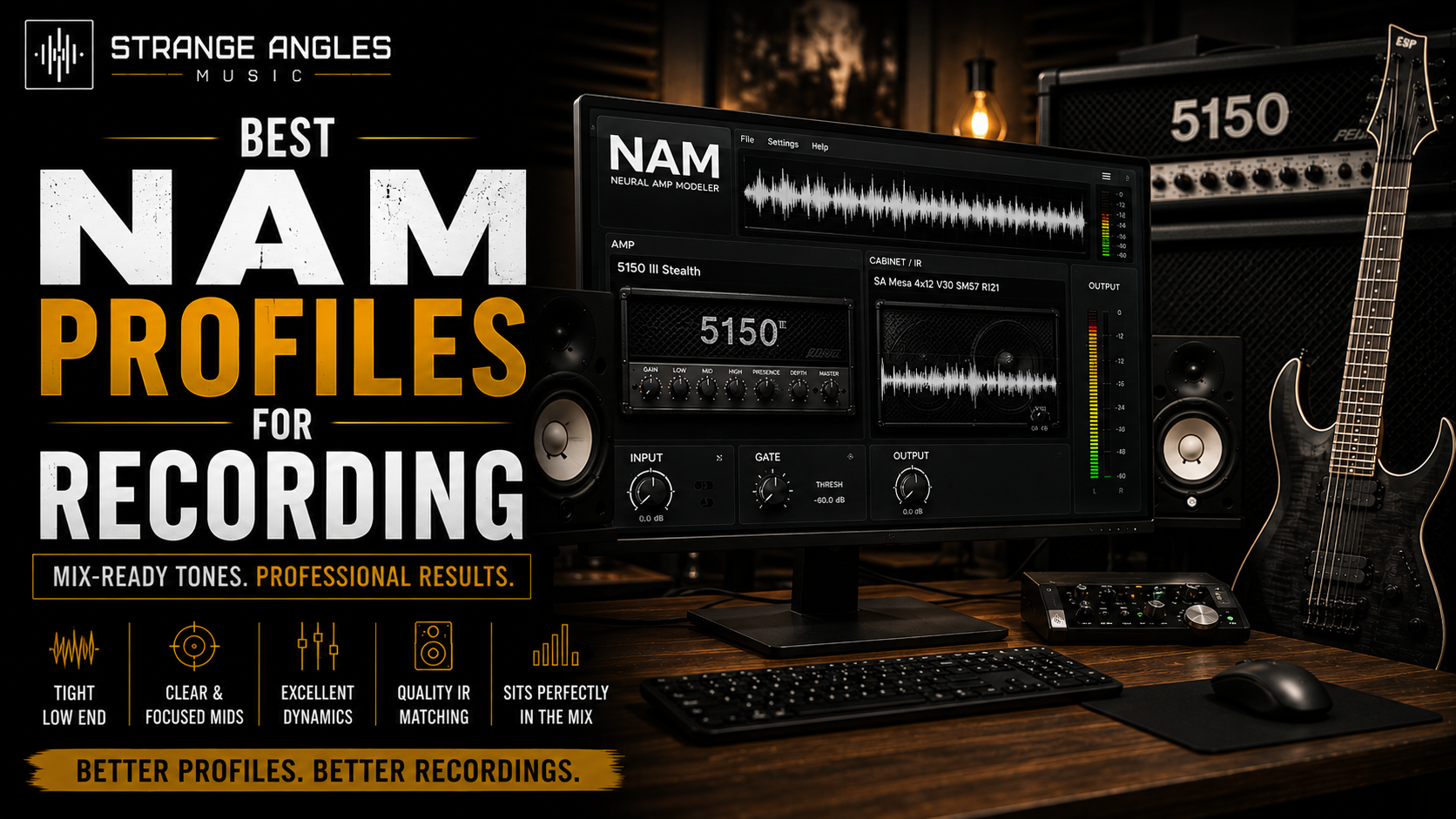
Best NAM Profiles for Recording
One of the biggest advantages of Neural Amp Modeler (NAM) is its ability to recreate the feel and response of real amplifiers with incredible accuracy. But not every profile is equally suited for recording.
A great recording profile should sit naturally in a mix, respond well to your playing, and require minimal EQ during mixing. In this guide, we'll explore what makes a NAM profile ideal for recording, which amplifier types consistently deliver professional results, and how to build a signal chain that works in any DAW.
Looking for Great Tones?
Spend less time tweaking and more time recording. Explore professionally crafted NAM Profiles designed to deliver authentic, mix-ready guitar tones straight into your DAW.
What Makes a Great Recording Profile?
Recording profiles should provide:
Tight low end
Balanced mids
Clear top end
Low noise
Excellent note separation
Consistent dynamics
The goal isn't the biggest guitar tone—it's the one that fits naturally into a mix.
Best Amp Types for Recording
EVH 5150 III
A favorite for modern rock and metal thanks to its tight attack and mix-ready character.
Excellent for:
Metalcore
Modern Metal
Hard Rock
Peavey 6505
Aggressive mids and outstanding articulation make it one of the easiest high-gain amps to record.
Mesa Dual Rectifier
A classic choice for huge rhythm guitars with unmistakable character.
Great for:
Nu Metal
Alternative Metal
Heavy Rock
Marshall JCM800
A studio legend that excels in:
Classic Rock
Punk
Hard Rock
80s Metal
Soldano SLO-100
Known for its smooth gain structure and expressive lead tones while still delivering articulate rhythm sounds.
Pair Your Profile With a Great IR
The impulse response is every bit as important as the amp profile.
Popular recording speakers include:
Celestion Vintage 30
Celestion Greenback
Eminence DV-77
Celestion Creamback
Trying different IRs often produces a bigger improvement than changing profiles.
Double-Track Your Guitars
Professional recordings almost always feature double-tracked rhythm guitars.
Record separate performances instead of duplicating one take.
The result is a wider, more natural stereo image.
Use Less Gain
Too much gain reduces clarity.
Lower gain generally provides:
Better articulation
Stronger palm mutes
Improved note separation
Easier mixing
Monitor Accurately
Evaluate your tones using:
Studio monitors
Quality headphones
Reference tracks
Accurate monitoring helps you make better mixing decisions from the start.
Frequently Asked Questions
What are the best NAM profiles for recording?
Profiles based on the EVH 5150 III, Peavey 6505, Mesa Dual Rectifier, Marshall JCM800, and Soldano SLO-100 consistently produce excellent recording results when paired with quality IRs.
Should I EQ while tracking?
Small adjustments are fine, but many engineers prefer capturing a balanced tone first and making detailed EQ decisions during mixing.
Can free NAM profiles sound professional?
Yes. A well-made free profile can produce excellent recordings, though professionally captured profiles often offer greater consistency and require less tweaking.
Final Thoughts
The best recording tones start long before you hit record. Choosing a high-quality NAM profile, pairing it with the right IR, and using sensible gain settings will help your guitar sit naturally in the mix with less effort.
Focus on clarity and balance, and you'll spend more time creating music instead of fixing problems later.
Ready to Upgrade Your Tone?
Explore professionally crafted NAM Profiles built for recording musicians who demand authentic, mix-ready guitar tones.