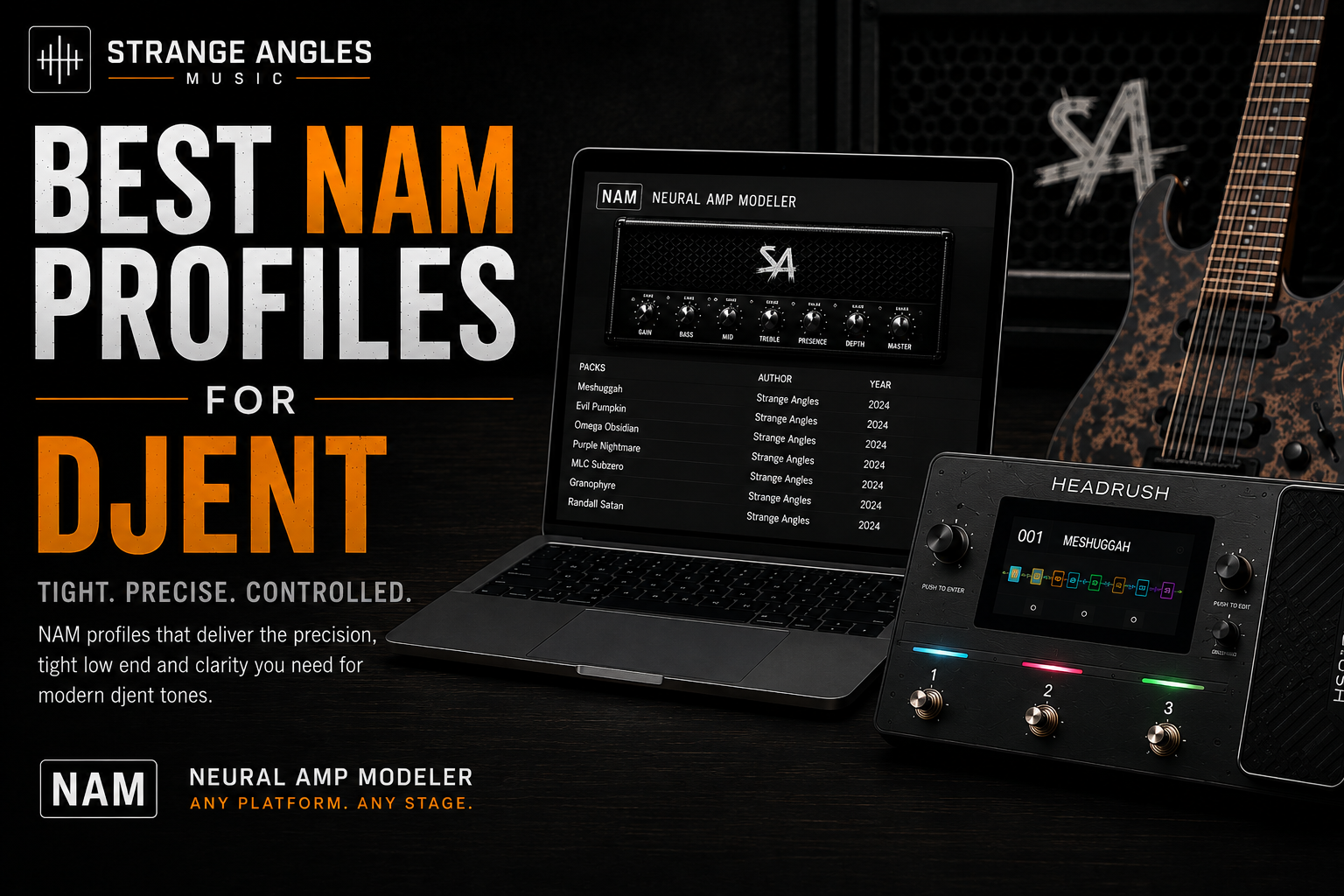
Best NAM Profiles for Djent
Djent guitar tone is all about precision, tightness, and control. The best NAM profiles for djent deliver an extremely controlled low end, fast pick response, aggressive mids, and enough saturation to make complex riffs hit hard without becoming muddy.
Whether you're playing a 6-, 7-, or 8-string guitar, the right NAM profile can make low tunings feel significantly tighter and more articulate.
Looking for Great Tones?
Spend less time tweaking and more time playing. Explore professionally captured NAM profiles designed for tight, modern, mix-ready guitar tones.
🎸 Browse Premium NAM Profiles →
What Makes a Great Djent NAM Profile?
Djent places unusual demands on a guitar rig. Extremely low tunings and highly rhythmic playing expose any weakness in the amp, boost, IR, or EQ.
A great djent profile should provide:
Extremely tight low end
Fast pick attack
Excellent note separation
Controlled saturation
Strong upper mids
Clear, defined palm mutes
The goal isn't necessarily the biggest-sounding tone by itself. It's a tone that stays tight and intelligible when the arrangement gets dense.
1. Fortin Meshuggah
The Fortin Meshuggah is an obvious choice for precision-oriented modern metal.
Its tight, controlled response works extremely well for the rapid rhythmic patterns and low tunings associated with djent.
Best for:
Djent
7-string guitars
8-string guitars
Drop A and lower
Fast rhythmic riffs
Extremely tight palm mutes
If your priority is precision, this is one of the first profiles to try.
2. Fortin Evil Pumpkin
The Fortin Evil Pumpkin offers a more aggressive and saturated character while retaining excellent control over the low end.
It works particularly well when you want your djent tone to sound heavier and more aggressive rather than ultra-clean and clinical.
Best for:
Modern djent
Progressive metal
Low tunings
Heavy breakdowns
Aggressive rhythm guitars
3. Omega Ampworks Obsidian
The Omega Ampworks Obsidian is an excellent choice for players who want modern high gain with strong note separation.
It's particularly useful with extended-range guitars where maintaining definition in the lowest strings is critical.
Best for:
7-string guitars
8-string guitars
Drop A and lower
Technical djent
Complex rhythmic patterns
4. Driftwood Purple Nightmare
The Driftwood Purple Nightmare brings a thicker and more massive character to the djent category.
It can produce a huge rhythm sound while maintaining the tight response needed for low-tuned riffs.
Best for:
Thick djent tones
Progressive metal
Layered rhythm guitars
Low tunings
Massive productions
If you want big and aggressive rather than ultra-clinical, this is a strong option.
5. Randall Satan
The Randall Satan is particularly well suited to extremely low-tuned metal.
Its aggressive response and controlled low end make it a natural choice for 7- and 8-string guitars.
Best for:
Low-tuned djent
8-string guitars
Heavy rhythmic playing
Breakdown riffs
Extremely aggressive tones
6. Granophyre
The Granophyre delivers an aggressive modern high-gain character with plenty of definition.
It works particularly well when you're combining technical riffs with heavier, more saturated sections.
Best for:
Progressive djent
Technical metal
Modern metal
Low tunings
Complex riffs
7. MLC Subzero
The MLC Subzero is focused, fast, and precision-oriented.
That's exactly what you want when you're playing highly syncopated riffs where every note needs to remain clearly defined.
Best for:
Technical djent
Fast riffs
Tight palm mutes
Complex rhythms
Studio tracking
8. RedSeven Duality
The RedSeven Duality is a strong option for progressive players who don't want their tone to be limited to rhythm guitar.
It can work particularly well when songs move between tight rhythmic sections, melodic passages, and lead work.
Best for:
Progressive djent
Djent leads
Melodic sections
Complex arrangements
Modern progressive metal
9. RedSeven Leviathan
The RedSeven Leviathan offers a more versatile high-gain platform for players who need both rhythm and lead tones.
It's useful for djent productions where the guitar has to cover a lot of sonic territory.
Best for:
Rhythm and lead
Progressive metal
Melodic djent
Layered guitar parts
Versatile rigs
10. Carstens Empire
The Carstens Empire provides a more dynamic approach to modern high gain.
It can respond particularly well to picking dynamics, making it useful for progressive players who want their guitar tone to react naturally to their playing.
Best for:
Progressive djent
Dynamic riffs
Technical playing
Melodic sections
Modern productions
Classic Amps Can Work for Djent Too
Djent doesn't require a purpose-built modern metal amp.
Classic high-gain platforms can work extremely well when paired with the right boost and IR.
EVH 5150
The 5150 provides the aggressive mids and tight high-gain character that makes it an excellent foundation for modern metal.
Marshall JCM800
A boosted JCM800 can deliver an extremely aggressive midrange and excellent pick attack.
Soldano SLO-100
The SLO-100 offers a smoother and more saturated character that can work particularly well for progressive djent and lead tones.
Mesa/Boogie Rectifier Rev G
The Rectifier delivers a massive low end and aggressive character. With the right boost and IR, it can become an enormous djent rhythm platform.
Best NAM Profiles for Different Djent Styles
Djent StyleRecommended ProfilesModern DjentFortin Meshuggah, Evil PumpkinTechnical DjentMLC Subzero, ObsidianProgressive DjentRedSeven Duality, Carstens EmpireUltra-Low DjentRandall Satan, Granophyre7-String DjentFortin Meshuggah, Obsidian8-String DjentRandall Satan, ObsidianThick / Massive DjentPurple Nightmare, Rectifier Rev GDjent With LeadsRedSeven Leviathan, Soldano SLO-100
The IR Is Just as Important
Even an excellent NAM profile can sound wrong when paired with an unsuitable IR.
For djent, look for IRs that provide:
Tight low frequencies
Controlled low mids
Strong upper-mid attack
Enough high-end detail for pick definition
Speakers such as Vintage 30, DV-77, G12T-75, and Greenback can all produce useful results depending on the amp and tuning.
If your tone sounds too dark, muddy, or harsh, try changing the IR before changing the entire profile.
Don't Overdo the Gain
This is especially important with djent.
A heavily saturated tone can sound impressive when you're playing by yourself, but too much gain can destroy the definition that makes djent work.
Try backing the gain down until:
Palm mutes become sharper
Individual notes separate
Pick attack becomes more obvious
Chords become easier to distinguish
Double-tracked guitars become tighter
A slightly drier tone will often sound much heavier in a mix.
Tighten Before You Add More Gain
If the low end feels loose, don't immediately reach for more distortion.
Try:
Guitar → Overdrive → NAM Profile → IR → EQ
Use the overdrive to tighten the signal going into the amp.
A good starting point is:
Drive: Low
Tone: Around the middle
Level: High
Then adjust according to your guitar, tuning, pickups, and profile.
Final Thoughts
The best NAM profiles for djent are the ones that give you precision without sacrificing aggression.
For extremely tight modern tones, start with the Fortin Meshuggah, Fortin Evil Pumpkin, Omega Obsidian, MLC Subzero, or Randall Satan.
For thicker and more organic tones, try the Driftwood Purple Nightmare.
And if you're building a progressive djent rig that needs to handle both rhythm and lead work, the RedSeven Duality, RedSeven Leviathan, and Carstens Empire are excellent places to explore.
The key is to focus on tightness, pick attack, and note separation rather than simply adding more gain or bass.
Ready to Upgrade Your Tone?
Stop endlessly tweaking and start with professionally captured NAM profiles designed for modern metal, djent, and low-tuned guitar.