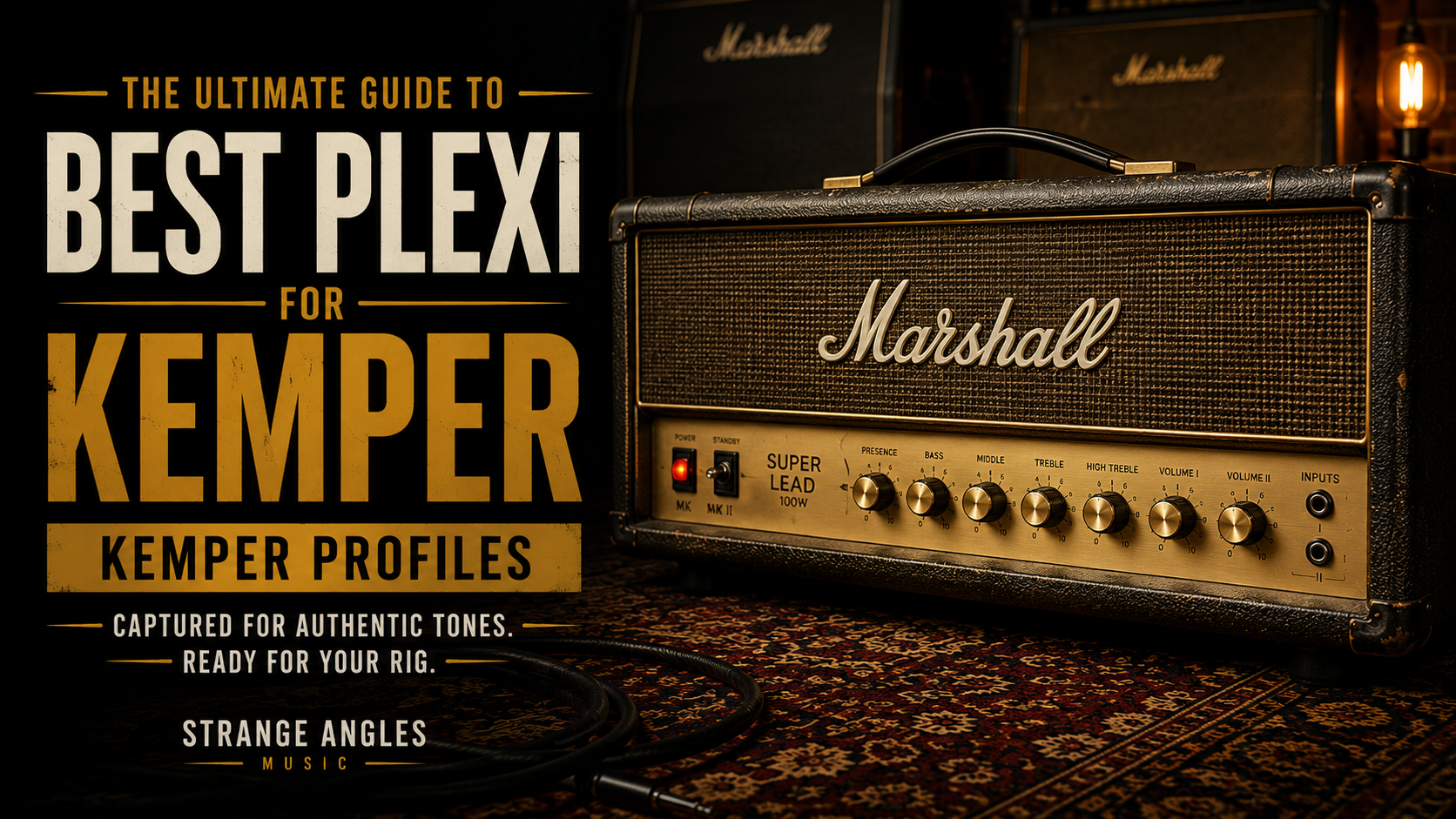
Best Marshall Plexi Kemper Profiles
The Marshall Plexi is one of the most influential guitar amplifiers ever built. Long before high-gain amplifiers dominated rock and metal, the Plexi became the sound of British rock thanks to its open dynamics, rich harmonics, and unmistakable crunch.
From Jimi Hendrix and Jimmy Page to Eddie Van Halen's early recordings, the Marshall Plexi has shaped generations of guitar players. Today, Kemper users can experience those legendary tones without owning a vintage amplifier.
If you're searching for the best Marshall Plexi Kemper profiles, this guide will help you understand what makes a great profile and how to choose the right one for your playing style.
Looking for Great Tones?
Spend less time tweaking and more time playing. Explore professionally crafted Kemper profiles designed to deliver authentic, mix-ready guitar tones for the studio, stage, and beyond.
What Is a Marshall Plexi?
The term "Plexi" refers to Marshall amplifiers built during the late 1960s that featured a plexiglass control panel.
Although several models fall under the Plexi name, they all share characteristics that helped define classic rock guitar:
Open, dynamic response
Warm midrange
Bright but musical highs
Natural compression at high volume
Incredible touch sensitivity
Unlike many modern amplifiers, a Plexi rewards playing dynamics and guitar volume adjustments instead of relying on multiple gain channels.
Why Guitar Players Still Love the Plexi
More than fifty years after its introduction, the Plexi remains one of the most recorded amplifier designs in history.
Players appreciate it because it offers:
Exceptional clarity
Smooth overdrive
Rich harmonic complexity
Outstanding response to picking dynamics
Excellent compatibility with boost pedals
Rather than masking your playing, the amplifier amplifies your technique.
What Styles Is a Plexi Best For?
Although famous for classic rock, the Plexi works well across many genres.
Popular choices include:
Classic Rock
Blues Rock
Southern Rock
Hard Rock
Hair Metal
Punk Rock
Vintage Metal
With the right boost pedal, many players even use Plexi-style tones for heavier modern music.
Famous Guitarists Known for Plexi Tones
The Marshall Plexi has powered countless legendary performances.
Players associated with Plexi-style sounds include:
Jimi Hendrix
Jimmy Page
Angus Young
Eddie Van Halen (early years)
Paul Kossoff
Robin Trower
Gary Moore
Yngwie Malmsteen
While every player had a unique setup, the amplifier's unmistakable voice remains instantly recognizable.
Best Cabinets for a Plexi
The cabinet plays a major role in shaping the final sound.
Popular combinations include:
Marshall Basketweave 4x12
Marshall 1960A
Marshall 1960B
Marshall 1960AX
Many players prefer vintage-style cabinets because they complement the amplifier's natural warmth and dynamics.
Which Speakers Work Best?
Celestion Greenback
The speaker most commonly associated with vintage Marshall tones.
Known for:
Warm midrange
Smooth breakup
Vintage compression
Balanced highs
Celestion Creamback
Creambacks maintain much of the Greenback character while adding:
Slightly tighter bass
Increased power handling
Fuller low end
Celestion Vintage 30
For players who want a more modern interpretation of the Plexi.
Offers:
Greater midrange cut
More aggressive attack
Excellent performance in dense mixes
Understanding Plexi Gain
One of the biggest surprises for first-time Plexi users is how much of the distortion comes from turning the amplifier up.
Vintage Plexis were designed to be played loudly.
When pushed, they develop:
Natural compression
Harmonic richness
Smooth overdrive
Singing sustain
Professionally created Kemper profiles capture this sweet spot without requiring stadium-level volume.
Should You Use a Boost Pedal?
Many players pair a Plexi with a Tube Screamer-style overdrive.
A boost can provide:
Tighter bass
Increased sustain
Sharper attack
More focused rhythm tones
This approach became especially popular during the late 1970s and early 1980s as rock music became heavier.
What Makes a Great Plexi Profile?
Not every Kemper profile captures the magic of a vintage Marshall.
The best profiles preserve:
Dynamic response
Pick sensitivity
Rich harmonics
Natural amp compression
Balanced EQ
Realistic feel
A great profile should clean up when you roll back your guitar's volume and roar when you dig in.
Free vs Commercial Plexi Profiles
There are thousands of free profiles available online.
Some are excellent.
Commercial profiles often stand out because they are created using:
Well-maintained vintage amplifiers
Carefully matched tubes
Professional recording equipment
Multiple gain settings
Carefully selected microphones
The result is a more polished and consistent playing experience.
Frequently Asked Questions
Is the Marshall Plexi high gain?
Not by modern standards.
Most of its legendary overdrive comes from turning the amplifier up and using the guitar's controls effectively.
Is a Plexi better than a JCM800?
Neither is objectively better.
The Plexi generally offers a more open, vintage sound, while the JCM800 delivers tighter, more aggressive distortion with additional gain.
Can I play metal with a Plexi?
Yes.
Many players use a boost pedal to tighten the amplifier and create surprisingly aggressive rhythm tones.
Are Plexi profiles good for recording?
Absolutely.
Many engineers appreciate the Plexi because it sits naturally in a mix without requiring excessive EQ.
Final Thoughts
The Marshall Plexi remains one of the greatest amplifier designs ever created because it combines simplicity with incredible musicality.
A great Kemper profile captures the amplifier's touch sensitivity, harmonic richness, and unmistakable British character while giving you the convenience of modern digital gear.
Whether you're chasing vintage blues rock, classic rock, or the roots of hard rock and heavy metal, a professionally crafted Plexi profile is an excellent addition to any Kemper library.
Experience Legendary British Tone
At Strange Angles Music, we create professionally crafted Kemper profiles that capture the character, feel, and response of legendary amplifiers. Designed for players who want authentic tones without endless tweaking, our profiles are ready for the studio, rehearsal room, or stage.