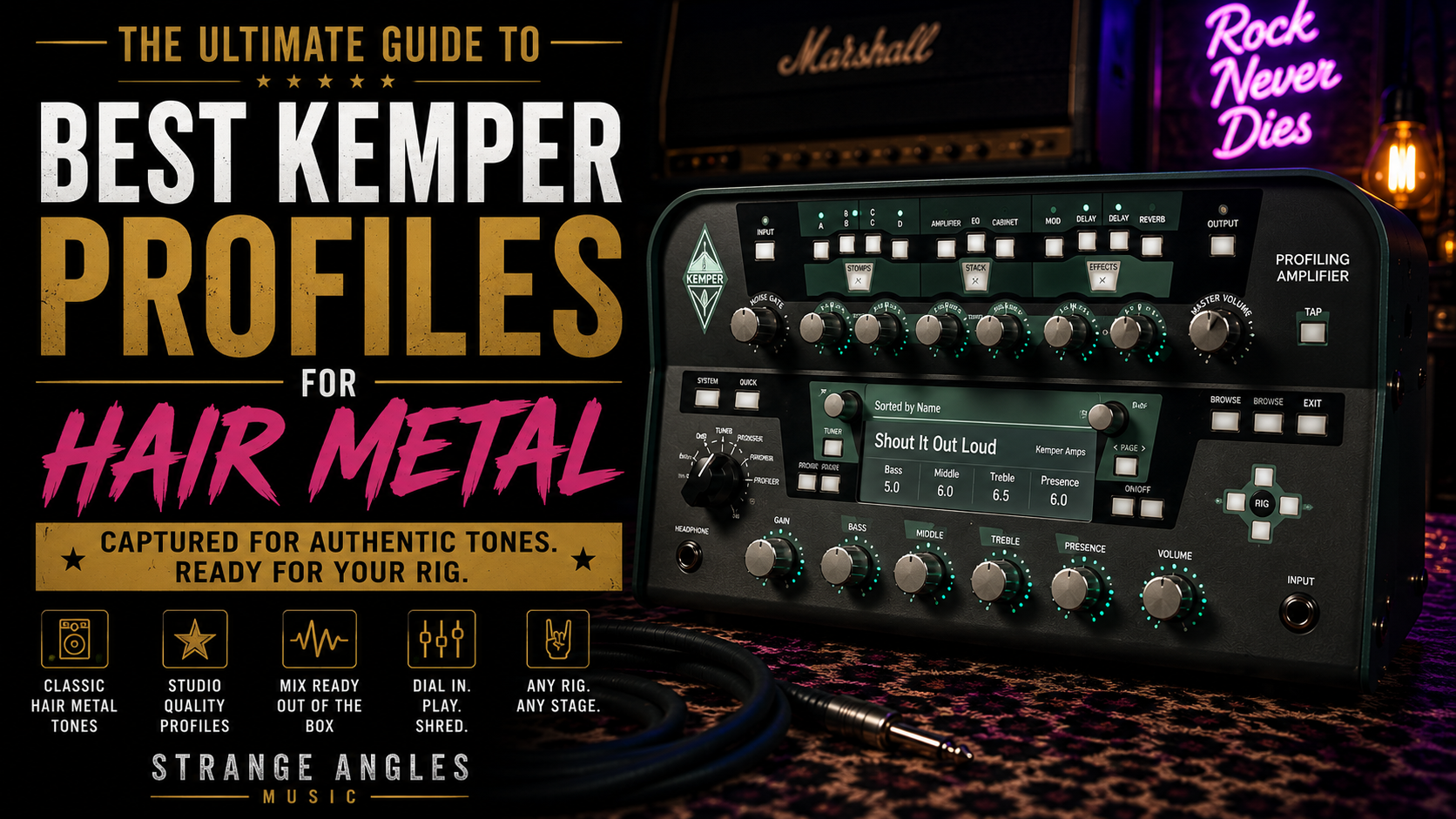
Best Kemper Profiles for Hair Metal
Hair metal defined the sound of the 1980s with massive guitar tones, soaring solos, rich harmonics, and unforgettable arena-rock anthems. From the crunchy rhythm guitars of Dokken and Ratt to the polished production of Def Leppard and the explosive lead tones of George Lynch, Warren DeMartini, and Reb Beach, the guitar sound of the era remains one of the most recognizable in rock history.
If you're using a Kemper Profiler, you already have one of the best tools available for recreating those legendary tones. The key is choosing the right profiles, cabinets, and effects.
In this guide, we'll break down exactly what to look for when choosing Kemper profiles for hair metal and how to build an authentic 80s-inspired rig.
Looking for Great Tones?
Spend less time tweaking and more time playing. Explore professionally crafted Kemper profiles designed to deliver authentic, mix-ready guitar tones for the studio, stage, and beyond.
What Makes a Great Hair Metal Guitar Tone?
Hair metal wasn't about extreme gain.
Instead, the best tones combined:
• Strong upper mids
• Tight but natural bass
• Singing sustain
• Excellent note separation
• Rich harmonic content
• Smooth high frequencies
The result was a guitar tone that sounded huge on stage while remaining clear enough for layered studio recordings.
The Best Amplifiers for Hair Metal
Several amplifiers became staples of the genre and continue to influence guitar players today.
Excellent choices include:
• Marshall JCM800
• Marshall Plexi
• Soldano SLO-100
• Mesa/Boogie Mark III
• Mesa/Boogie Mark IV
• Bogner Ecstasy
• Friedman BE
• EVH-style amplifiers
While every guitarist had their own approach, these amps consistently delivered the punch, sustain, and articulation that defined the era.
Choosing the Right Cabinet
The speaker cabinet is one of the biggest contributors to classic hair metal tones.
Popular cabinet choices include:
• Marshall 1960A 4x12
• Marshall 1960B 4x12
• Mesa/Boogie 4x12
• Bogner 4x12
Most players paired these cabinets with Celestion speakers that emphasized warmth, punch, and smooth upper mids.
The Best Speakers for Hair Metal
Celestion Greenback
Known for:
• Vintage warmth
• Smooth breakup
• Rich midrange
Perfect for early 80s hard rock tones.
Celestion G12T-75
Known for:
• Tighter bass
• Brighter top end
• Excellent rhythm definition
Widely associated with late 80s rock and metal.
Celestion Vintage 30
Offers:
• Aggressive mids
• Tight response
• Great versatility
A solid choice for players blending classic hair metal with more modern hard rock.
Don't Overdo the Gain
One of the biggest surprises when chasing 80s tones is how moderate the gain settings often were.
Instead of relying on excessive distortion, many players boosted already-cranked amplifiers using overdrive pedals.
This created:
• Better note definition
• Stronger pick attack
• Cleaner chord voicings
• More dynamic lead playing
Lower gain often sounds much bigger in a full mix.
Effects That Defined the Era
Hair metal wouldn't sound the same without effects.
Common choices included:
• Stereo delay
• Plate reverb
• Chorus
• Flanger
• Phaser
• Pitch harmonizer
The key is using effects to enhance the guitar—not bury it.
Most classic recordings used effects tastefully rather than excessively.
If You Like These Bands
Professionally created Kemper profiles can help you build tones inspired by:
• Dokken
• Ratt
• Def Leppard
• Whitesnake
• Bon Jovi
• Mötley Crüe
• Poison
• Cinderella
• Winger
• Extreme
• Europe
• Skid Row
Every guitarist had a unique rig, but these artists all relied on expressive amplifiers, quality cabinets, and dynamic playing rather than overwhelming amounts of distortion.
Rhythm vs Lead Profiles
One mistake many Kemper users make is trying to use one profile for every situation.
Professional players often use separate profiles for:
Rhythm Guitar
• Slightly less gain
• Tighter bass
• More focused mids
• Faster attack
Lead Guitar
• Slightly more sustain
• Added delay
• Plate reverb
• Slight mid boost
Using dedicated rhythm and lead profiles creates a much more authentic live and studio sound.
Why Commercial Profiles Can Save Time
There are thousands of free Kemper profiles available online.
Some are excellent.
However, professionally created profiles often offer:
• Better amp preparation
• More consistent capture quality
• Carefully selected settings
• Mix-ready tones
• Less time spent tweaking
Rather than searching through hundreds of random profiles, many players prefer loading a profile that's already been refined for recording or live performance.
Frequently Asked Questions
What's the best amp for hair metal?
The Marshall JCM800 remains one of the defining amplifiers of the genre, although Soldano, Mesa/Boogie Mark series amplifiers, and Plexi-style amps are also excellent choices depending on the artist and era.
Do I need active pickups?
No.
Many legendary hair metal guitarists used passive humbuckers.
The amplifier, cabinet, and playing style contribute just as much to the final sound.
Should I use a boost pedal?
Many players prefer using a Tube Screamer-style overdrive with low Drive and high Level to tighten the amplifier without adding excessive distortion.
Can I use these profiles live?
Absolutely.
The Kemper has become a favorite among touring musicians because it delivers consistent tones night after night while eliminating the need to transport multiple tube amplifiers.
Final Thoughts
Hair metal guitar tones continue to inspire players because they strike an incredible balance between power, clarity, and musicality.
Rather than chasing extreme gain, focus on responsive amplifiers, quality cabinets, tasteful effects, and expressive playing.
A professionally crafted Kemper profile provides an outstanding foundation that allows you to spend less time tweaking and more time making music.
Ready to Build Your Ultimate 80s Rig?
At Strange Angles Music, we create professionally crafted Kemper profiles designed to capture the feel, punch, and character of legendary rock amplifiers.
Whether you're covering arena-rock classics or writing your own music, our profiles are built to deliver inspiring tones from the moment you plug in.