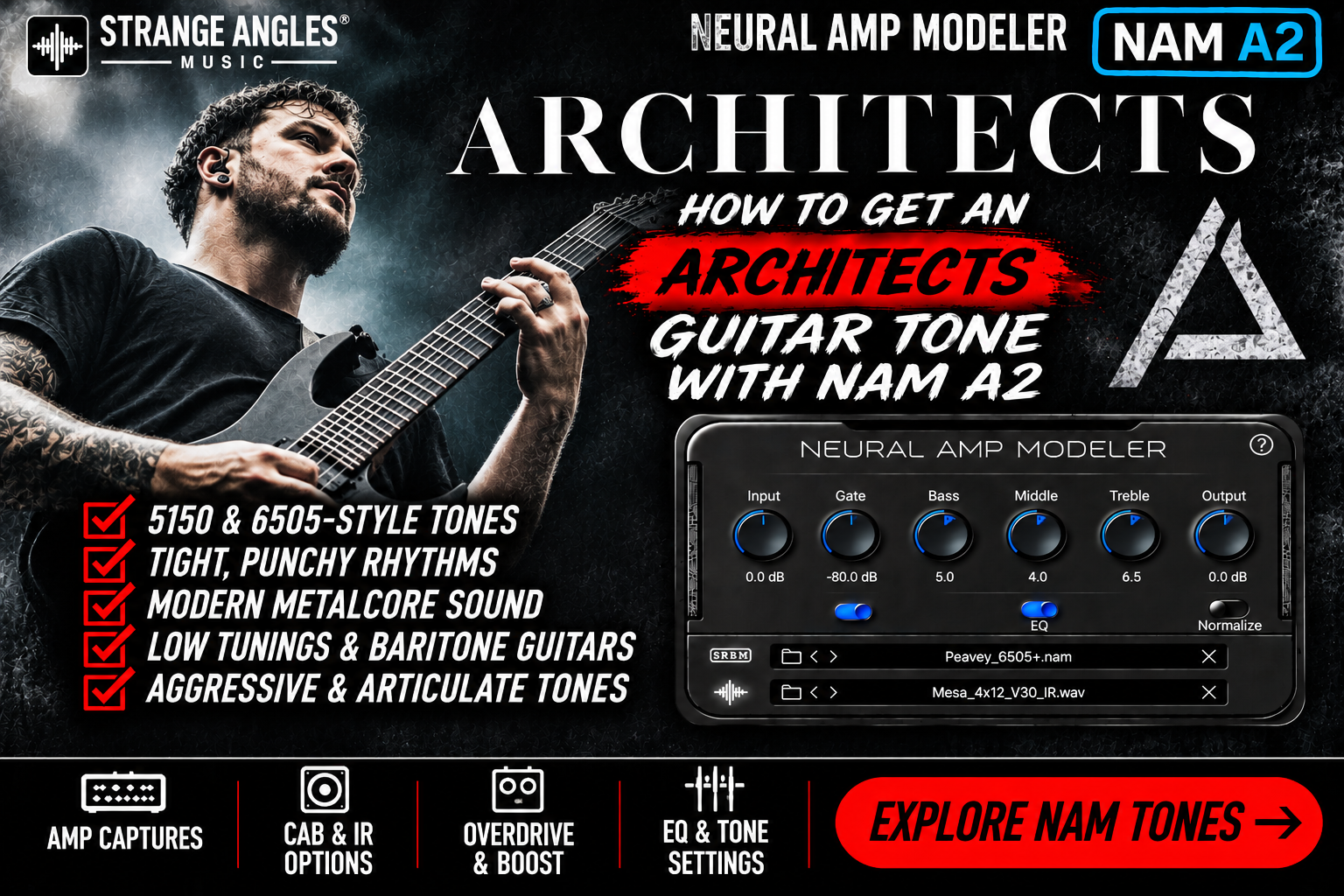
How to Get an Architects Guitar Tone with NAM A2
Architects have helped shape the modern metalcore sound with crushing low-tuned riffs, aggressive high-gain guitars, punchy rhythms, and atmospheric layers.
Their guitar tones have evolved over the years, but one thing remains important: the guitars need to sound massive while staying controlled and clear in a dense mix.
In this guide, we'll look at some of the real amplifiers, guitars, and gear associated with Architects, then explore how to approach a similar sound using Neural Amp Modeler A2 profiles.
Looking for Great Tones?
🎸 Explore professionally captured NAM A2 profiles designed for aggressive modern metal, tight rhythm playing, and powerful high-gain guitar tones.
What Makes the Architects Guitar Tone?
Architects' sound combines several elements that work together:
Tight low end: Low-tuned riffs have weight without becoming muddy.
Aggressive mids: The guitars remain powerful and present in a full mix.
Controlled high gain: Distortion is heavy without completely sacrificing note definition.
Modern cabinet tones: Speaker and microphone choices help shape the final recorded sound.
Layered production: Guitars work alongside vocals, electronics, orchestration, and other production elements.
The goal isn't simply to use the highest-gain amp available. It's to find an amp and cabinet combination that delivers the right attack, punch, and clarity.
What Amps Has Architects Used?
Architects have used different amplifiers and digital platforms throughout their career. Their documented rigs provide some useful starting points for building a similar tone.
Peavey 6505+
Josh Middleton discussed using a Peavey 6505+ for recording, with a Maxon OD-808 overdrive in front of the amp.
His described setup included an oversized Mesa/Boogie cabinet loaded with Vintage 30 speakers and a Shure SM57 microphone.
One particularly interesting detail was his approach to the amp's midrange. He explained that the green channel had so much midrange character that he kept the mids very low while still getting a clear, present sound.
This is a useful reminder that the right amplifier and cabinet combination can deliver plenty of presence without extreme EQ adjustments.
Peavey 5150 Block Letter
The original 5150 is another important reference point in Architects' guitar sound.
Josh Middleton has discussed using a block-letter 5150 profile for his Kemper setup. His live tones have also been built around custom profiles based on his recording equipment.
A 5150-style amp is a natural starting point for the aggressive, punchy rhythm tones associated with modern metalcore.
Victory Kraken
Josh Middleton also used a Victory Kraken during the recording of Holy Hell, alongside a block-letter 5150.
The Kraken offers another high-gain direction, with a different character from the traditional 5150 sound.
Mesa/Boogie Cabinets and Vintage 30 Speakers
The cabinet is a major part of the Architects guitar sound.
Josh's documented 6505+ setup used an oversized Mesa/Boogie cabinet with Vintage 30 speakers and an SM57.
This combination is worth keeping in mind when selecting an IR for your NAM profile. The right cabinet response can make a bigger difference than constantly changing amp settings.
Best NAM A2 Profiles to Explore for an Architects-Inspired Tone
You don't need the exact original rig to explore this style. These Strange Angles Music NAM collections offer several useful high-gain starting points.
1. Euge Valovirta Hard Hitters Vol. 2 NAM
This is an excellent place to start if you're looking for traditional 5150-style aggression.
The collection includes both Peavey 5150 Block Letter and 5150 II D.I. amp captures, along with full-rig captures and additional amplifiers.
The 5150 captures are particularly relevant when chasing the punchy, aggressive rhythm character associated with Architects.
Explore Euge Valovirta Hard Hitters Vol. 2 NAM →
2. The Chuggernaut NAM Pack
The Chuggernaut includes captures from the EVH 5150 III Mod, KSR Orthos, and ENGL Savage, plus custom IRs.
The EVH 5150 III Mod is a strong option for modern high-gain rhythm tones. The additional amplifiers give you other ways to approach tight, aggressive metalcore sounds.
The included IRs also let you experiment with different cabinet responses.
Explore The Chuggernaut NAM Pack →
3. NAM Everything Pack
If you want more flexibility, the NAM Everything Pack gives you a broad selection of high-gain amplifiers.
It includes captures of the Fortin Evil Pumpkin, Fortin Meshuggah 2.0, Omega Granophyre, Omega Obsidian, Driftwood Purple Nightmare, Dover DA 50, and other amplifiers.
These amps offer different approaches to modern high-gain tones, from tight and aggressive to thicker, more saturated sounds.
Explore the NAM Everything Pack →
How to Dial In an Architects-Inspired NAM Tone
Once you've loaded a suitable NAM A2 profile, start with a simple signal chain and make adjustments based on your guitar and tuning.
1. Start with a 5150-Style Capture
Try a 5150-style profile first.
Look for a sound with a strong pick attack, aggressive midrange, and enough low-end control to handle lower tunings.
Don't immediately add more gain if the tone doesn't sound heavy enough. The cabinet and EQ may be more important.
2. Use an Overdrive to Tighten the Low End
A Maxon OD-808-style boost is a useful reference for this sound.
Try these general starting points:
Drive: Low
Tone: Around the middle, adjusted to taste
Level: Higher than unity
The goal is to tighten the signal feeding the amp, not to add another layer of distortion.
3. Pay Attention to the Midrange
Don't automatically scoop the mids for a modern metal tone.
The guitars need enough midrange to remain audible when the bass, drums, vocals, and other instruments enter the mix.
Make small adjustments while playing along with a backing track.
4. Choose the Right IR
Try a Vintage 30-style IR as one of your starting points.
If the sound is too harsh, experiment with a different microphone blend or cabinet position. If it's too dark, try an IR with more upper-midrange detail.
Remember that an IR can dramatically change how the same NAM profile sounds.
5. Keep Your Gain Under Control
Too much gain can make fast metalcore riffs sound less defined.
Start with a moderate amount of gain and increase it only until the sound has the sustain and aggression you need.
The best rhythm tone is often tighter and less saturated than you might expect when listening to a finished recording.
Guitar and Tuning Considerations
Architects have used extended-range guitars and lower tunings to achieve their heavy rhythm sound.
Premier Guitar's 2019 Rig Rundown documented Adam Christianson's 27.5-inch-scale LSL Bari Bone baritone, equipped with Bare Knuckle Ragnarok pickups. It was used for songs tuned to F#.
The rundown also documented guitars used for G# and C# tunings, with custom-gauged strings.
Josh Middleton has used ESP guitars equipped with Fishman Fluence Modern pickups, including baritone instruments.
These details matter because the guitar itself affects how a capture responds. Longer scale lengths and appropriate string gauges can help maintain tension and definition when tuning down.
You can use a standard six-string, seven-string, or baritone guitar, but make sure your strings are appropriate for the tuning you're using.
Can NAM A2 Get Close to the Architects Sound?
NAM A2 gives you access to captured amplifier tones that can provide a strong foundation for an Architects-inspired guitar sound.
However, the finished recordings involve more than an amplifier capture.
Your final tone will depend on:
The guitar and pickups
Tuning and string gauge
Amp capture and gain settings
Overdrive and EQ
Cabinet and IR selection
Double-tracking and mixing
Additional production and electronic layers
A single NAM profile won't automatically recreate an entire Architects recording. But the right capture, cabinet, and signal chain can get you into the right tonal territory.
Frequently Asked Questions
What amp does Architects use?
Architects have used several amplifiers and digital rigs. Documented examples include the Peavey 6505+, block-letter 5150, Victory Kraken, and Kemper Profiler setups using custom amp profiles.
What is a good amp for an Architects-style guitar tone?
A Peavey 6505 or 5150-style amp is an excellent starting point. The Peavey 6505+ is particularly relevant to Josh Middleton's documented recording setup.
Does Architects use Kemper?
Yes. The band has used Kemper Profilers for live guitar tones. Their rigs have included custom profiles based on their recording amplifiers.
Can I get an Architects-style tone with NAM A2?
Yes. A 5150-style NAM capture, an appropriate cabinet IR, and a tightening overdrive can provide a strong foundation for this style of metalcore tone.
What IR should I use for an Architects-inspired tone?
A Vintage 30-style IR is a good starting point, especially when exploring the 6505+ and Mesa/Boogie cabinet combination associated with Josh Middleton's documented setup.
Final Thoughts
Architects' guitar sound demonstrates how important the entire signal chain is to modern metalcore.
A 5150-style amplifier, a tightening overdrive, and the right cabinet response can provide an excellent foundation. Keep the low end controlled, preserve the midrange, and avoid adding unnecessary gain.
Start with the NAM A2 captures that suit your guitar and tuning, experiment with different IRs, and build a tone that stays aggressive and articulate in your own mixes.